
Simon Reynolds

Simon Reynolds is a music journalist and author. He began his writing career with Melody Maker in the mid-80s. He has contributed to a wide range of publications including Pitchfork, The New York Times, The Wire and The Guardian. He is the author of books about music and popular culture, including: Rip It Up and Start Again: Postpunk 1978-84 (2005); Retromania: Pop Culture’s Addiction to Its Own Past (2011) and Futuromania: Electronic Dreams from Moroder to Migos (2020).
His latest book, Still in a Dream: Shoegaze, Slackers and the Reinvention of Rock, 1984–1994, is published by White Rabbit on June 18.
Is it fair to describe Still In A Dream as a sequel to Rip It Up and Start Again: Postpunk 1978–1984?
It is kind of, yeah. Timewise and chronology-wise; it picks up round about where the postpunk book ends. It’s different from a sequel in the sense that there’s almost no characters in the first book that survive into the second one, they’re not relevant to what I’m writing about. But quite a few of the groups in this book start out kind of postpunky and then they change. Very early My Bloody Valentine were influenced by The Birthday Party and The Cramps and then they went through this drastic transformation. So, a lot of them start out in that era, and you can hear in some of the shoegaze groups that they love The Cure and New Order basslines, but it’s a whole different aesthetic; it’s very different from postpunk. The lyrics are not as important. The other difference is that I’m in it a lot more. In the postpunk book, I’m really an onlooker. I was reading the music papers and buying what few records I could afford. In the era of Still In A Dream, when I was a music journalist, I probably went to more gigs in a month than I went to in the whole of my postpunk youth. So, I’m right in the thick of the scene. I’m meeting the bands, I know some of them, I’m friendly with some of them, I know the people who run the record labels. So, I’m in it as a sort of protagonist of the story, I suppose. It’s quite a different book.
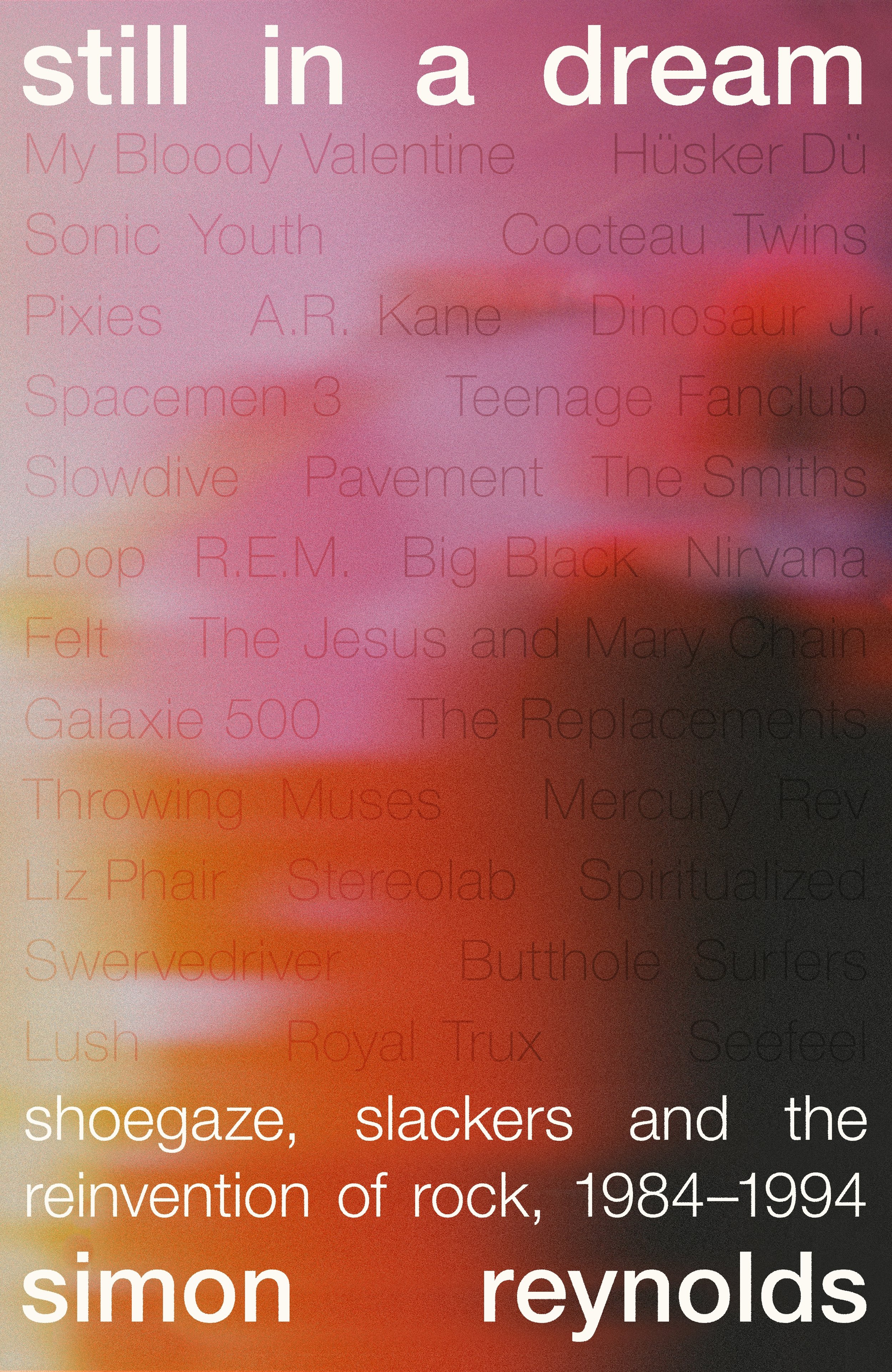
The word “dream” crops up so many times in the book; song titles, band names, album titles. It’s in the title of the book, from the My Bloody Valentine song, and of course A.R. Kane’s “dreampop”.
Yeah, that sort of emerged as the leitmotif really. The idea of daydreaming. Some of the groups were actually interested in dreams as a source of inspiration. A.R. Kane, they coined this term “dreampop”, which was a great slogan or mission statement in a single word. A.R. Kane used lucid dreaming techniques and songs would emerge in their dreams and they would use these techniques to remember the vibe they wanted or a melody. But the idea of life becoming dreamlike, it’s sort of a neo-psychedelic idea in some ways, escaping what was a pretty grim time politically. The backdrop to this era is high unemployment and a government that’s very out of step with your values and the tone of Thatcherism was repugnant, the sort of nasty coldness of Thatcherism and the idea that money is the overriding value. So there was a sort of almost wanting to dream your way through the era. There’s a quote from Bobby Gillespie where he talks about how important listening to The Byrds was. The Byrds, one of these 60s groups that was rediscovered in this era I’m writing about. Gillespie talks about, the beauty and dreaminess of The Byrds helped us get through this grey, dark, cold era that we were living in.
It was Irish music journalist Helen Fitzgerald (who sadly passed away in 2024) who first brought My Bloody Valentine to your attention.
They were kind of an odd group because they had a long period of not being very good or just fairly nondescript. I remember them being very friendly and they had 60s-style hair and Helen Fitzgerald pushed them. She was on the staff of Melody Maker and the main thing I remember her writing about was this hype that she did on My Bloody Valentine as the next Jesus and Mary Chain. The Jesus and Mary Chain at that point were about as big as a band could be. Psychocandy had been the record of 1985. To me they were sort of a not-quite-as-good version of the Mary Chain, so I didn’t rate them at that point particularly, and then something seemed to happen. I think when Bilinda joined that added some vital chemistry, and then Kevin becomes this scientist of guitar sounds and starts really doing amazing things. It all started to combust a year and half after Helen Fitzgerald was trying to big them up in the Melody Maker and giving them their first feature.
You describe hearing, ‘You Made Me Realise’ in August ‘88 as a “thunderbolt”.
Yeah, there just seemed to be a dramatic ratcheting up of intensity in the music and the force of it and these sort of sounds that were very kind of woozy. Later, I went back to some of the records they made just before this and you can hear sort of the beginnings of something interesting, they have a very nice song called ‘Strawberry Wine’, but it’s nowhere near as forceful and overwhelming as ‘You Made Me Realise’. There was a track on the other side called ‘Slow’ that was more mid-tempo and it was very languorous and sexy and the bass grind of it felt like it was rooted in funk or hip-hop. But it was mainly the sort of ethereal wooziness of the guitar sound and it made you feel like you were kind of nodding out, like your eyes are running back in your head. At gigs when you saw groups like My Bloody Valentine or similar ones like Loop and Spaceman 3, you would almost instinctively sway from side to side as if you were about to faint. I was knocked out by them. They seemed to instantly go from a third division band to first division. Creation made them the headlining band of their fifth anniversary gig, out of nowhere. They were above all the other groups on the label, Primal Screen, Felt, The House of Love, they ended the night. It was a very meteoric rise for the group.
The book is very much a celebration of the music from this era?
It’s intended as a love letter to this era. I’m trying to help people to understand how the world operated then, the world before the internet existed, really. Everything’s about vinyl and to find out about bands you had to buy the music press every week. It’s an analogue culture. I’m explaining how that world worked and the sort of intensity that it created, the excitement of reading about a record before you heard it. I’m trying to convey the excitement of that time from a journalist’s point of view. Of being a young man, trying to make my mark in the world, it’s about a blessed period in my life, but I also think objectively that it was a very exciting period musically. A lot happened within guitar music at that time.
Simon Reynolds joins Paul McDermott to chat about MBV, shoegaze and a whole lot more on To Here Knows When – Great Irish Albums Revisited. Available on all listening platforms.