
Rónán Ó' Snodaigh & Myles O' Reilly
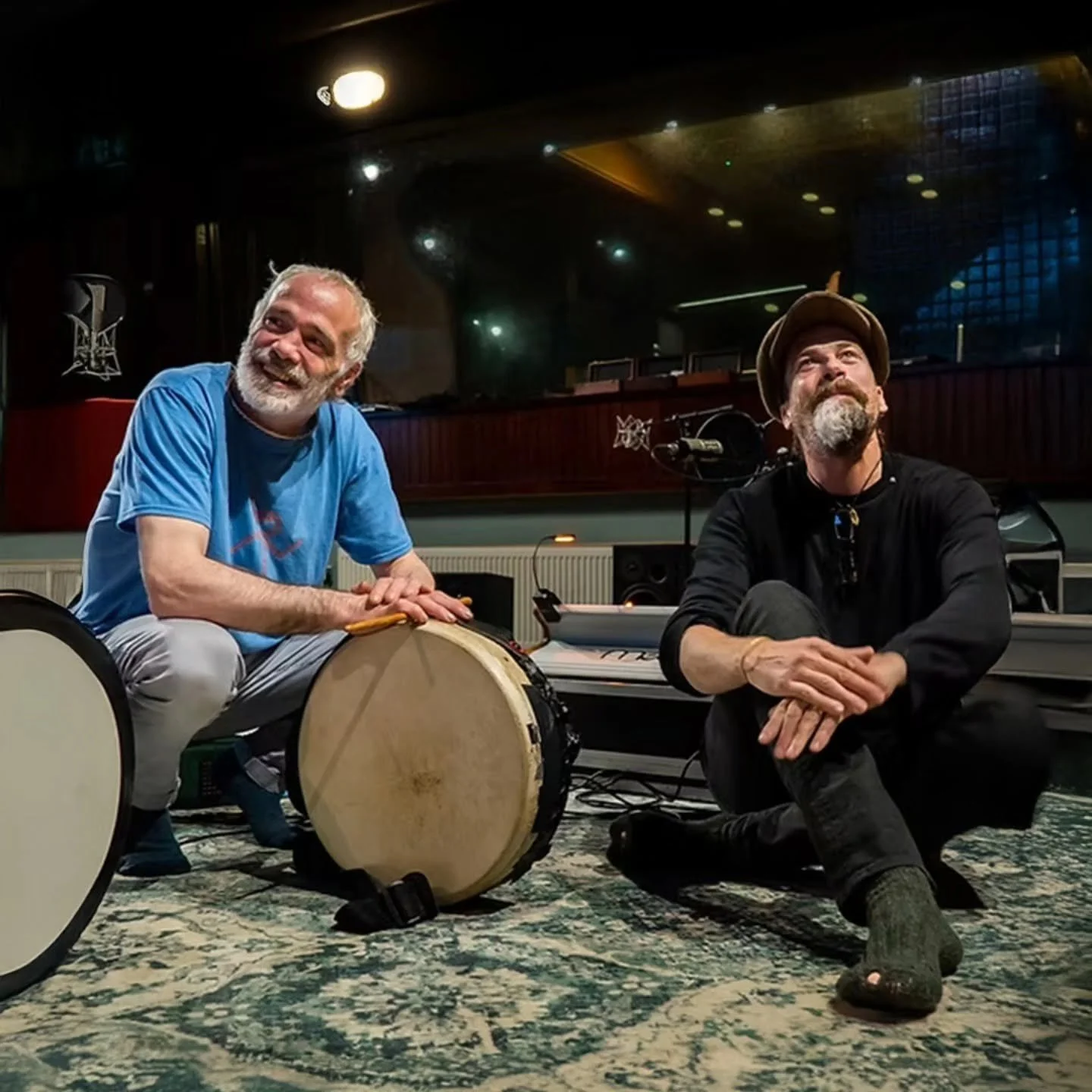
Rónán Ó'Snodaigh & Myles O' Reilly
Words: Liam Griffin
The third album from the exciting collaboration between Rónán Ó’ Snodaigh and Myles O’Reilly, Mise Tusa, was released on May 1st via Claddagh Records. I spent some time chatting to Rónán and Myles about their collaboration, and the new release.
Mise Tusa is your third collaboration together. What is it that keeps drawing you back to one another?
MO’R: We don't like repetition and when we're in the studio together we're constantly surprising ourselves. The albums aren’t so much like three albums, they're just a continuation of what we do. We don't even think about it, really, in terms of albums. There's kind of an evolution in what we're doing that continues to surprise us and suggests doing other things as well. So, we never go back on ourselves, really; like, we're not stuck on one sound or one theme. It's a constantly changing process. The first album [Tá Go Maith (2021)], we were stuck indoors, you know, with lockdown and everything, so it's a very soft, huggy kind of thing. Then the second album [The Beautiful Road (2023)], the world was coming alive again, and Rónán, you can hear it in his drums. You can hear the rattles of civilisation come back, you know? There was an emphasis on that kind of mood as well, the mood that was around us. And so, again now, with this third one, the mood around us is just what's in the music. I think it's the song singing the singers as opposed to the singers singing the song. Rón, what do you think?
RÓ’S: That's a good way of putting it. We're trying to get somewhere and I'm not sure where it is - MO’R: - do you know what it is, I thought of it this way: it's like we're both walking up a hill. It's like you’ve chosen to meet your buddy and go walking up this massive mountain together. And you know you're going somewhere, you don't see the end of the mountain, like, but every time you turn around the view gets a hundred times more interesting and the mountains start to appear and Ireland starts to appear in the distance. It just gets more interesting as we walk up the hill.
RÓ’S: yeah, the mountains open out and ones that you didn’t even know were there
MO’R: and it's that simple, really. There's no other agenda other than for us to get together and walk up, and experience that in real time.There’s a communal, tribal, and almost primal feel to Mise Tusa. Could you speak into that a small bit?
RÓ’S: I love hearing what other people think 'cause after a while I come around the back end of what I’m at and then I go, “oh, I've circled it.” That's as far as I can see. I don't know what it is until people tell me, or I come to a certain amount of distance, or something. So, if that's what it is I'm delighted that that feeling is there.
MO’R: Yeah, I could feel that from Rónán when we started recording these tunes as well, and I'm guilty of maybe bringing in a kind of a rave-y element, you know? There's a bit of a festival bump going on as well, in parts, like, where it's appropriate. So we’re picturing playing a few bangers this summer, you know? [laughs] Boost some audiences as opposed to making them fall asleep [laughs].
On Mise Tusa, you beautifully struck the balance between honouring the past and having more modern elements, for example on songs like ‘Réir Dé’ and ‘Ní Liom Dom’. What was it like finding that balance?
MO’R: Well, it's a complete success to say that you see that balance because we come in only with a notion that we'll put a little bit more pepper in it this time, you know? And then when it works out, we feel it's right or that the colours are right. We just keep being reminded that we're doing the right thing, and those elements seem to fit together nicely. This time we lived with the album longer. We lived with the mixes a lot longer so we had a lot of time, actually, to think about that balance. And, I mean, it's not to say that the other albums aren't well balanced, but we didn't miss anything this time.
RÓ’S: I don't like being exclusive, you know what I mean? Sonically, I think we’re, hopefully, we’re including everyone's taste. MO’R: And it suits us to have a record like this as well. And there's quite a lot of lyrics that aren’t Rónán’s and songs from other people, and it just suits us at the moment to have this kind of universal inclusion. With the help of Claddagh Records, we just might get the rocket to leave the atmosphere, you know?
I'm wondering about the title, Mise Tusa. What does that phrase mean to you, and why was it chosen to be the title?
RÓ’S: I've been tossing that around in my head for ages, and honing in on that. A lot of it is a debate I’ve been having with myself of individualism, or co-existence. I'm making it sound a bit too philosophical. It’s something like that: we’re unique but we’re also entwined with each other. There's a lot of little legs to that phrase. The song ‘Mise Tusa’ [sixth track on the album], I was trying to write something about how troubled I was getting with the Israeli killing machine that I was seeing in the news for the last few years. Like, over here you wouldn’t raise your voice to a kid, you’d feel kind of embarrassed, but they're killing thousands of them. It doesn't compute. It's such a mad thing every day on your phone to hear that trained armies are killing kids, like, without thinking about it. On top of all the other things that they're at. But that really troubled me, so I suppose I was trying to imagine, like, we’re all intertwined, but unique and separate. I was trying to imagine what would I be like if I was a young Israeli fella. Like, if I was an Israeli would I be into what they’re doing? Would I think “this is brilliant, we're sorting it out”? So, that's how I wrote that song, from that perspective.
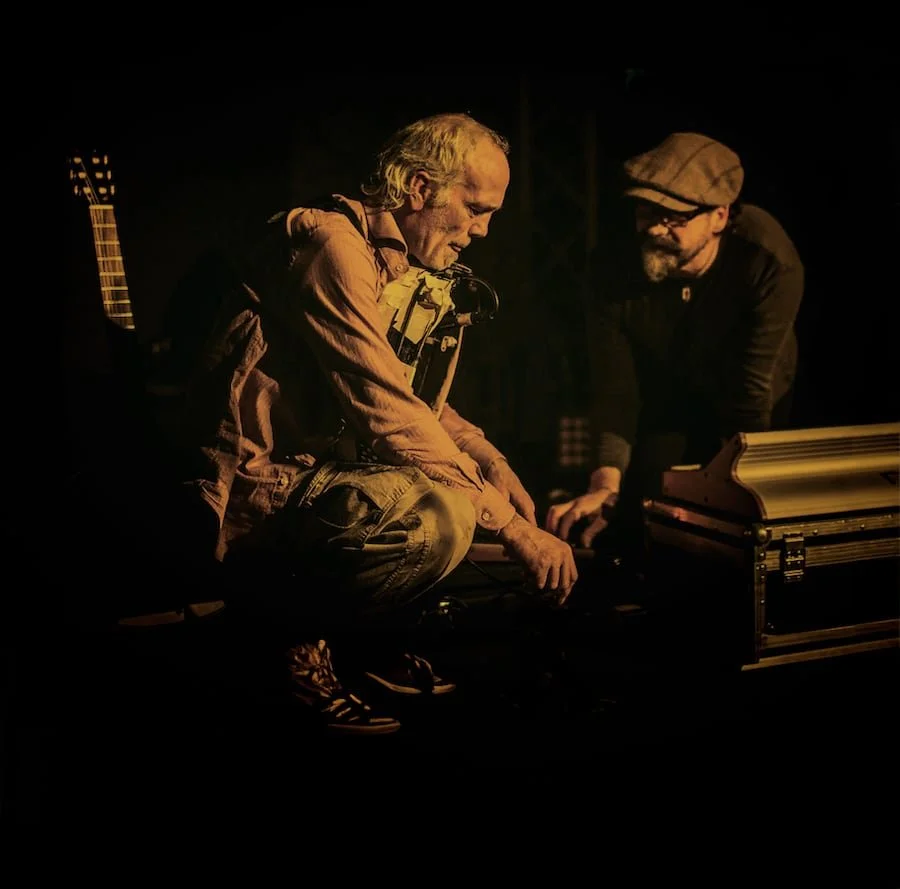
You’re playing Vicar Street in November 2026. How are you feeling about bringing the songs on Mise Tusa to life on stage?
RÓ’S: Truly excited.
MO’R: excited, yeah.
RÓ’S: We created a destination and, you know, we were kind of scared when we were talking about it but I thought, “yeah, let's make a destination; we’ll go from here to November and we'll finish up in Vicar Street.”
MO’R: And we’re touching base with other musicians, opening artists, people who’ll get up with us for a song or two, and people who might just back us up. Unlike the other albums, we’ve had a bunch of musicians play on this one, so that's us just being open to others coming in and having fun, and Vicar Street is definitely an excuse for that again.
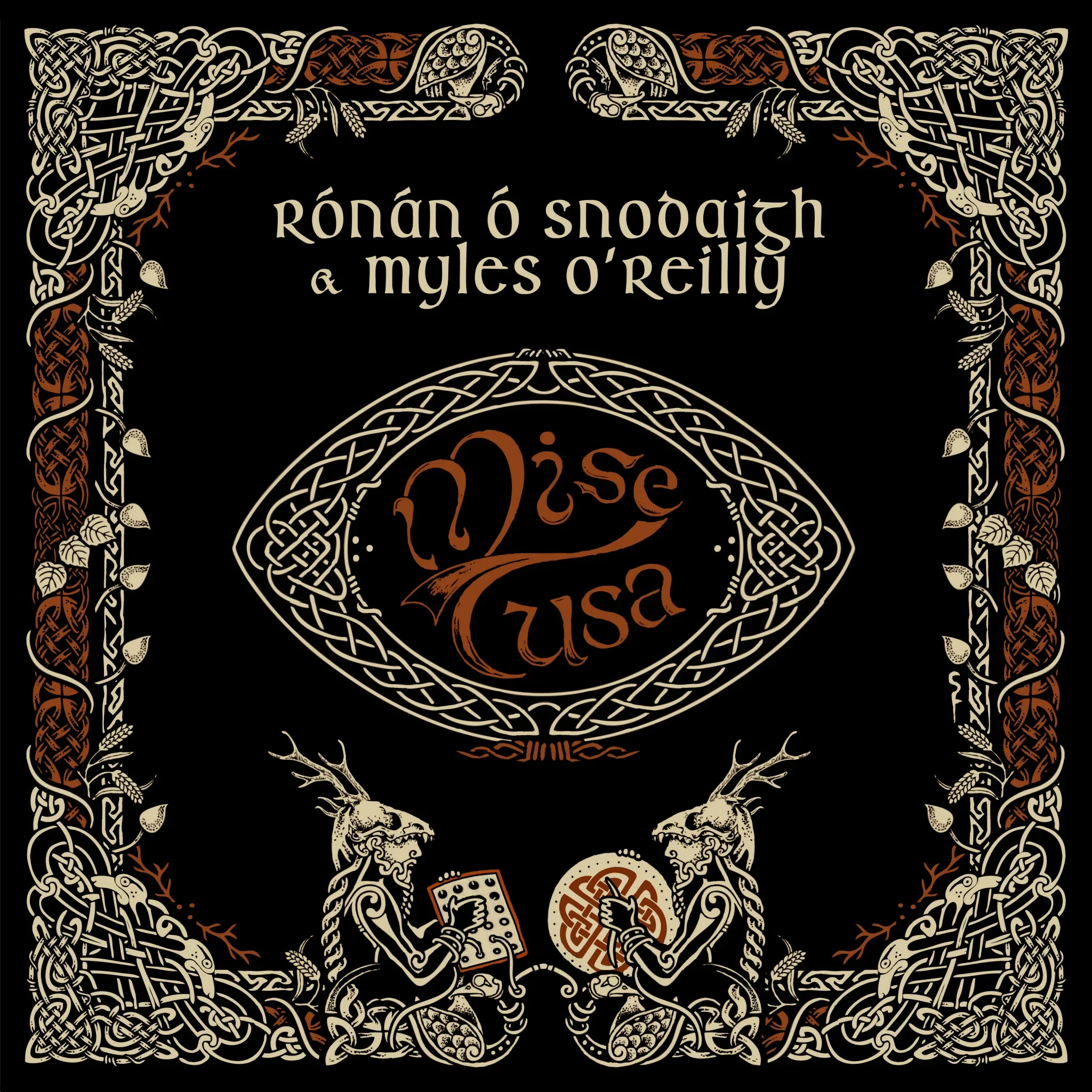
The wonderful third album by Rónán Ó’ Snodaigh and Myles O’Reilly, Mise Tusa, is out now and is available on all streaming services. They play Vicar St on November 5th, tickets from www.vicarstreet.com
https://www.youtube.com/watch?v=13wgxPQiKxA