
Rattling Ark
Rattling Ark
Words: Ruby Larson
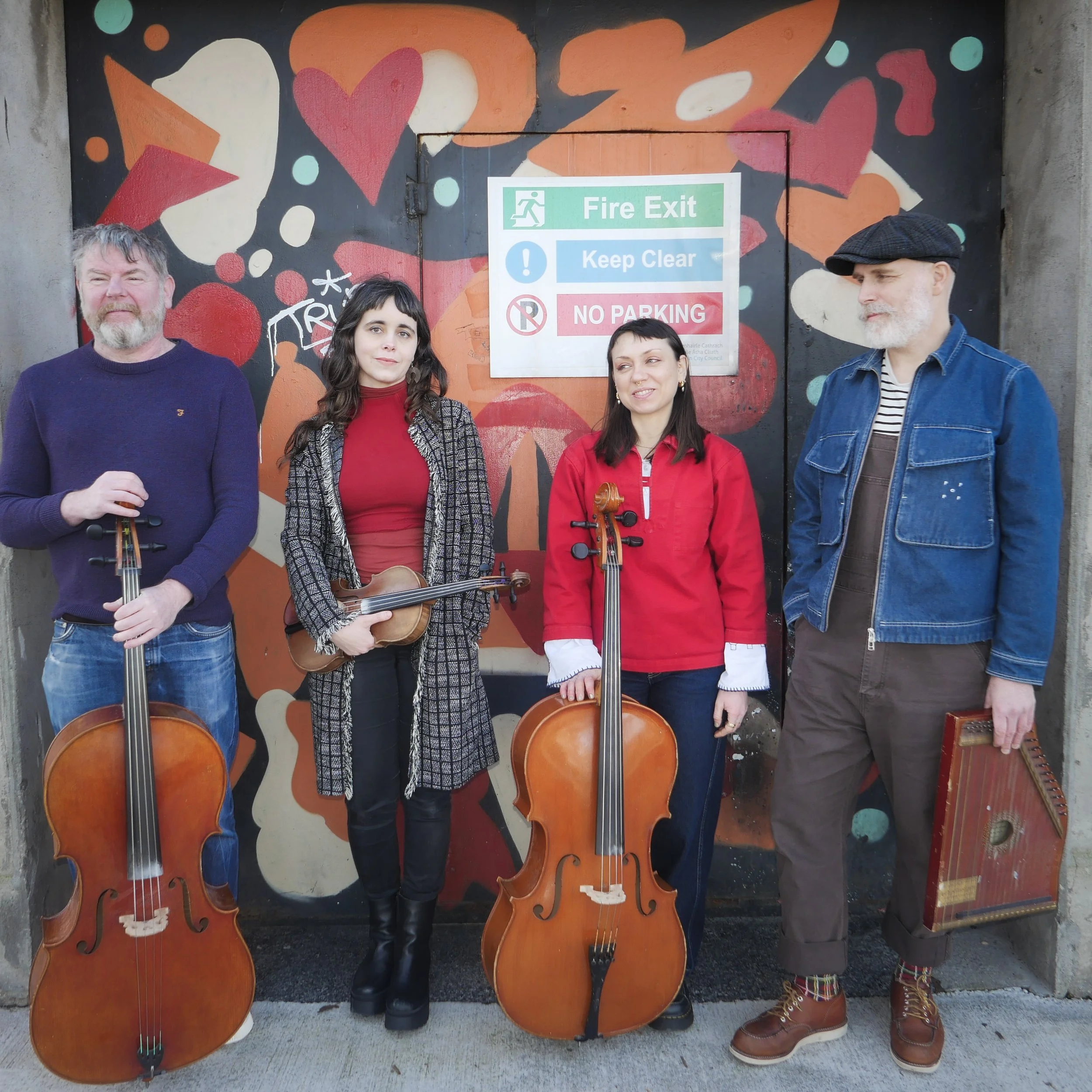
I sat down with Kevin Murphy and Lizzi Murtough, two of the three members of Rattling Ark, to chat about their debut album Top of a Mountain. The band has managed to craft a sound that feels uniquely their own by approaching Irish trad music and folk through a fresh contemporary lens, drawing together cello, voice, electronics and a host of unusual instruments without losing sight of the tradition at the music’s core.
The cultural significance of traditional Irish music has some people viewing the genre as fixed and sacred, one that should remain untouched by experimentation. Murphy is well aware of that perspective.
“We call them the trad police,” he says. “Undoubtedly, they're out there.”
He points out that traditional music thrives because of the people who preserve it. Organisations teaching young musicians around the country are doing “incredible work” keeping the tradition alive. Despite Murphy’s appreciation for said organisations, however, he is of the mind that tradition is not weakened by artists who push its boundaries.
“There’s people like us, I suppose, who go off and do odd things with it,” he says. “Some people would think that’s not a good thing, but I think it’s a small amount of people. If you think of some experimental bands like Lankum, they’re incredibly popular in Europe now. There’s probably people hearing Irish trad for the first time through bands like that and it’s drawing more people into it. I can’t see why that’s a bad thing.”
One of the album’s most distinctive features is its use of the cello. While the instrument has become increasingly common in folk-adjacent spaces, it remains an unusual lead instrument in traditional Irish music. When asked if performing traditional melodies on cello changes the emotional character of the tunes themselves and the question sparked interest from both musicians.
“That’s a good question,” Murphy says. “Because that’s the kind of thing we’re trying to preserve.” For him, the challenge lies in finding the essence of a tune and maintaining it without the ability to manipulate the cello in the same way as one does a fiddle.
“With a fiddle, you can go hell for leather and that emotional integrity is maintained,” he explains. “The cello seems funny. My approach is constantly listening to how a particular tune sounds on the cello. Does it sound trad enough? Well, what the fuck that means, I’m not really too sure.”
The pair repeatedly return to the idea that traditional music contains an intangible quality that is difficult to define but immediately obvious when it is absent.
“We don’t have a trad-o-meter,” Murphy jokes. “There are tunes I learn and put on the cello and go, ‘Yeah, that’s only a 15 and a half on the trad-o-meter.’”
Murtough, who comes from a classical background, describes the learning process as almost linguistic.
“It’s nearly like poetry,” she says. “It’s the same words, but syntactically you’re using them in such different ways that it turns the whole meaning of the sentence on its head.”
When she first began learning the traditional tunes, she’d play all the right notes, but both artists agreed there was something missing from the sound of it.
“If I was to speak that sentence, it wouldn’t be the same sentence as his sentence, even though they were the same words,” she explains. “There were technical things that helped, but I think the emotional integrity of the tunes also started to seep into my consciousness.” Eventually the pair settled on a metaphor that perhaps best describes their approach with capturing the character of traditional music: osmosis.
“Nobody knows exactly what it is,” Murphy says. “You just have to sit in it and let it do its thing to you over time.”
That willingness to absorb influences rather than rigidly define them extends throughout the album. Alongside the cello are zithers, electronics, the nyckelharpa and even an instrument invented by their collaborator Aki of Slow Moving Clouds.
The resulting arrangements often feel eerie, dreamlike and slightly otherworldly. Yet despite the broad palette of sounds, the music never loses its grounding. That is in part because of the songs’ familiar stories.
Folk music is rooted in storytelling, whether mythical, historical or deeply personal, and Top of a Mountain continues that tradition. The album includes songs drawn from the repertoire of singer Margaret Barry alongside instrumental pieces inspired by real historical events.
One such piece is ‘Anne Lovett’s Lament,’ inspired by the tragic story of Ann Lovett.
“There was a resurgence of information that came to light,” Murphy explains. “I became kind of obsessed [with] it and wrote the tune around that.”
Elsewhere, these traditional songs are transformed through the band’s own perspectives. One example is ‘Three Lovely Lasses from Banyan,’ which Murphy and Murtough joke about interpreting in entirely different ways.
“I think it’s a cute little song,” Murphy laughs. “About this girl who's so incredibly happy that she's going to get married. I get the impression she doesn't even care who it is. I'm not too sure. But she's getting married. Her mother has made a deal with her and she's even getting her bed.”
Murtough interprets the story as something much more bleak.
“I thought it was incredibly grim,” she says. “This girl’s one big moment in life is marrying this man she’s never met before and she’ll inherit her mother’s bed.”
That contrast in interpretations ended up shaping the final arrangement.
“You put a bit of yourself into any of these old songs,” she says. “Your point of view is going to come across no matter what.”
While the album draws from numerous stories and traditions, Murphy is reluctant to claim there is a single overarching narrative connecting everything together.
“I’d really love to be able to tell you there was a true thread,” he says. “But there probably isn’t.”
Instead, the album’s throughline comes from its sound world: the cello, the distinctive instrumentation and a shared fascination with balancing those feelings of familiarity with unease.
Murphy speaks on that balance saying, “If you can mix the familiar with something unsettling and haunting, that’s something to aim for. It’s easy to do something accessible and it’s easy to do something really weird. But getting the two to merge can be really difficult.”
The goal, he says, is to create music that challenges listeners while still drawing them in emotionally.
The album also marks a significant personal journey for Murtough. Before joining Rattling Ark, she had effectively stepped away from the cello altogether.
“When I moved here, I quit cello,” she says. “I never intended to play it again.”
Friends eventually encouraged her to pick the instrument back up, and what began as a tentative return soon snowballed into something much bigger.
“I've never imagined myself playing trad,” she says. “I never imagined as a cellist that that's something that I would or could do as well.”
With the album set for release and a few tour dates planned for the summer, Rattling Ark already has their eyes on the future. A second record is quietly taking shape behind the scenes. Murphy says they’ve got “loads done for that already.” For a band that’s just releasing their debut album, that level of forward momentum feels exciting.
Rattling Ark treats traditional music as a living thing: something to be absorbed, questioned, reshaped and passed on. As Murphy suggested, sometimes the best approach is simply to sit with it and see where it takes you.
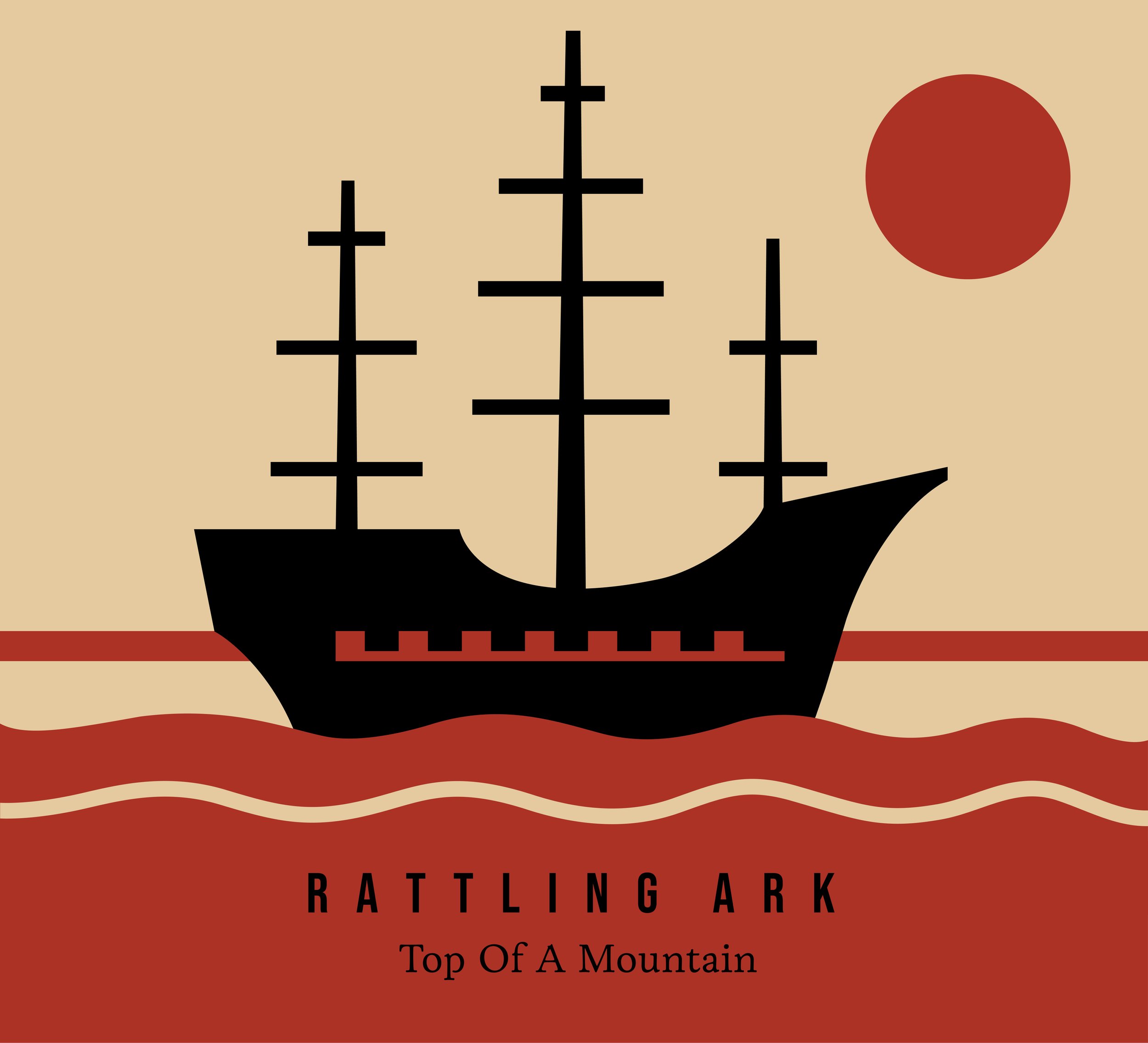
Rattling Ark’s debut album Top Of A Mountain is out now.
https://rattlingark.bandcamp.com/album/top-of-a-mountain
https://youtu.be/a5Eus_PVnZ0?si=zMHyr7c6kF08NWFh