
OTHER VOICES DERRY The Goo goes on the famous Other Voices Music Trail in Derry. Words: Leanne Gleeson
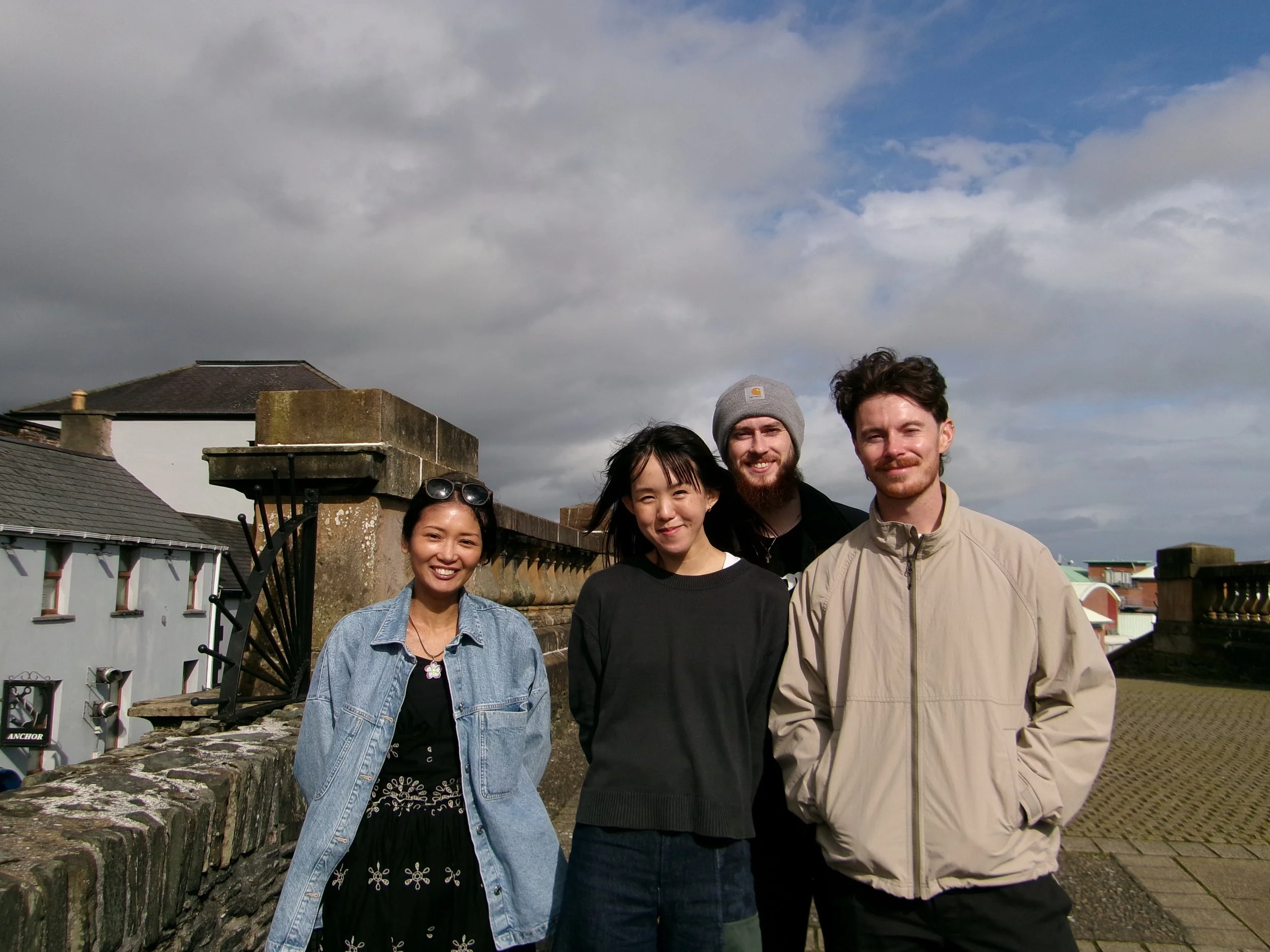
Telekura
You're playing your first headline shows later this year in London and Dublin. How are you feeling about it in the lead up?
Liam: Excited and nervous. Excited and nervous.
Rachel: Yeah, exactly excited and nervous.
Liam: Yeah, because it's a big expectation to play in London. Especially as an Irish band. We're not, I wouldn't say huge. But very excited to play it. Because again, playing in London… it's always good fun to play outside the country I think anyway.
Rachel: Yeah, and then we're playing in Dublin that same week, in Whelan's upstairs. So, that'll be fun. Having more of an ability to design our show is something we're looking forward to as well.
Do you have any pre-show rituals that you do before you go on stage?
Liam: We all really enjoy listening to Rachel's vocal warm-ups.
Michael: It's key to listen to those. Rachel: It goes like this: Mommy makes me mash my M&M's.
Liam: She's very proud.
Rachel: It's a bit questionable.
Michael: Just try to spend a bit of time around each other I think in the 20 minutes and 15 minutes leading up to the gig. That's kind of my only ritual to be honest.
Rachel: No drinks for Liam.
Liam: Yeah, I'm not allowed to drink before gigs. It's a rule. Today I get one or two.
Rachel: No, after [the gig]
Liam: Damn it!
Rachel: As the band mommy, I say no drinks for Liam because he has to play to a click in his ear. But Risa and Michael can drink.
Are there any artists in particular or genre that has influenced you as a band? Or do you all pluck from different inspirations as individuals?
Liam: We’re definitely all hugely individual. I was raised a punk drummer. Punk, rock and roll kind of stuff. I know Mike has been deeply into his heavy metal.
Michael: I'd be the same, yeah. Heavier background I suppose.
Liam: Risa on the synths is crazy into her classical.
Risa: Yeah, classical and maybe a bit of Japanese pop also because I grew up in Japan.
Rachel: Who's your favourite J-pop artist?
Risa: Superfly!
Rachel: And you can hear all of these influences in our music.
You just released your newest single ‘big nothing’ a couple weeks ago. How has feedback been since the release?
Rachel: It's been great. Yeah, overall it's been great.People have mentioned that it's a slightly different direction. It's a lot more guitar heavy than what we usually put out. Overall, I hope people are excited about the music and there's more to come.
Was there any reason why you leaned more into a guitar sound on ‘big nothing’?
Rachel: The song as is a bit more angsty in nature, lyrically. I think the guitar just adds a bit more weight to that song.
Liam: A bit of grit.
Rachel: Yeah, a bit of grit.That song is really about life coaches and how people on LinkedIn try and sell you packages. Like, you know… “One hour, 200 euros, I'll tell you how to live your life!” I really hate that. So, it became a song.
If you guys were to host a Telekura festival, who would you like to headline?
Michael: I'm going to go for MGMT as always. I think we'd fit well together with them.
Liam: Myself, I'd have to go Depeche Mode. That would have to be my choice.
Rachel: Stevie Wonder!
Risa: The Shins.
Telekura play at The Social in London on November 25 and Upstairs at Whelan’s in Dublin on November 27. Their newest single ‘big nothing’ is out now. For more information and to support the band directly visit telekura.com.
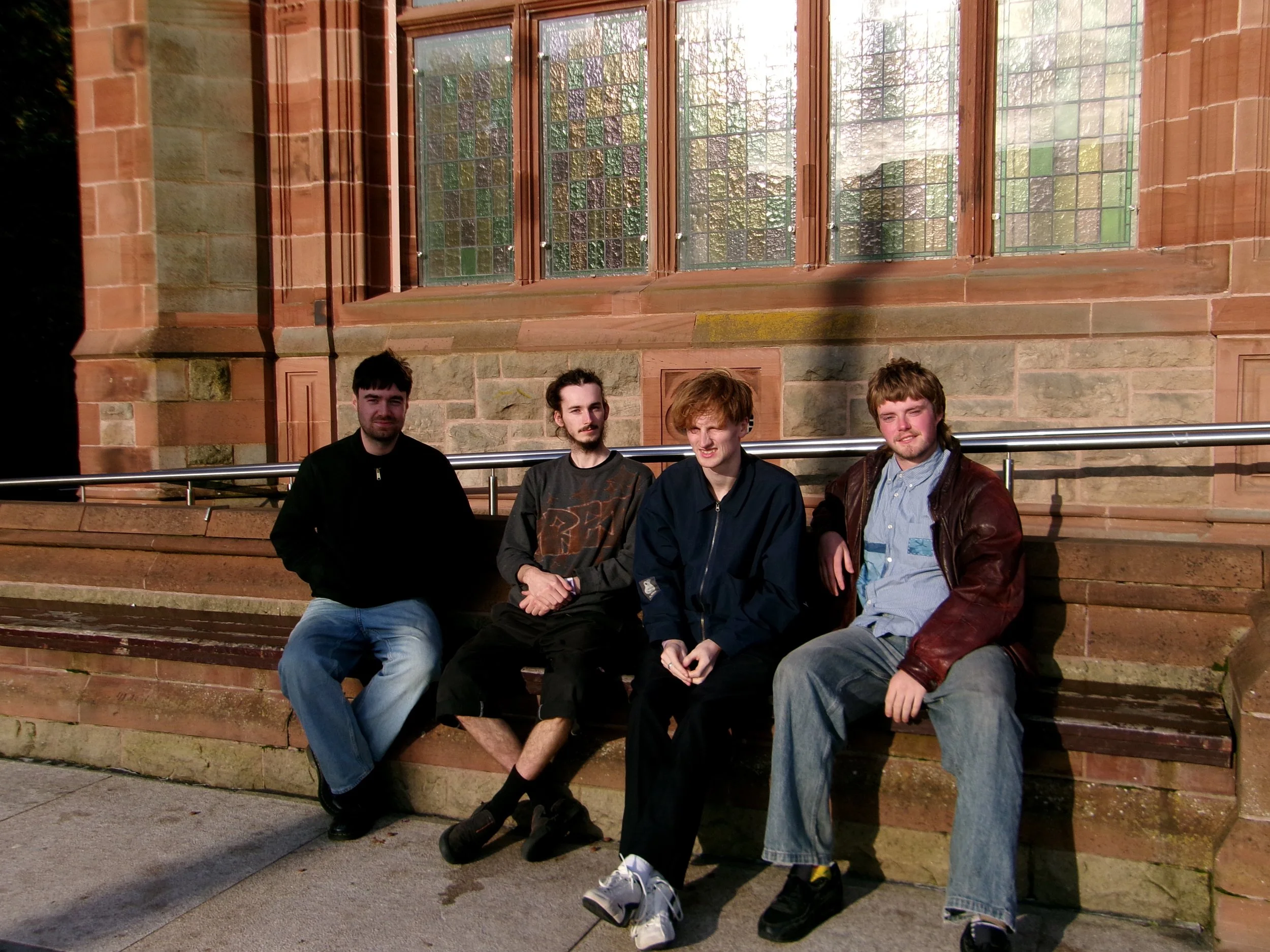
SELL EVERYTHING
Other Voices Derry 2026, how are we feeling?
Oisín: Feeling good, yeah.
Fionn: Feeling hot, hot, hot.
Tom: Feeling very good, this is going to be great.
You guys are going on tour with THEATRE in October, for their headline shows. How are you feeling about that?
Tom: Buzzing, yeah, it's going to be great. It's kind of our first proper tour, so really looking forward to it.We got good insight there with Maeve (THEATRE frontwoman) as well, chatting to her, so it's great. We know them already, so it's really nice. They'll be sold out as well. Makes it a lot easier, you know the people are going to be there.
Looking back on 2026 so far, what have been the highlights for you guys this year?
Fionn: Just being in the studio a lot. We've spent a lot of the time in makeshift studios and actual studios, just recording and writing a lot as well. That's been great.
Oisín: We've gone about as well, we've done some nice gigs up in Belfast. The second one we did there and coming here and everything. It feels like we're getting around, which is sick.
Toby: Going on some cool adventures as well, shooting footage for different bits. We’d be off in the mountains exploring.
When you say makeshift studios, what sort of set up is that?
Fionn: A laptop and a microphone and a couch is usually all we need.
Tom: It's usually all we kind of need, yeah.
Fionn: We don't need the couch.
Tom: Well, no, I think the couch is kind of the main thing. I think every song we have out was made on almost the same couch.
Fionn: Sitting down as well.
Tom: Sitting down on the same couch, the blue couch in my house basically. But yeah, just go into whoever's got a place to make some music when we need to get things done.I think we work very quick, so even decision making and shit, if we're like, oh, we need to redo that, we won't have time to book a studio… It's just like, all right, everybody come to my house, everybody go to Fionn's house, or Oisin or Toby's or everybody. We do a lot of production and work ourselves just with what we have, which is really fun and can make some really cool results.
Do you guys normally write together?
Oisín: It's kind of like any amalgamation of anything.
Fionn: Tom will often bring in like tunes for us to kind of workshop, but then I think more recently we've been jamming a lot as well.Like a lot of the more recent tunes have probably come out of jams.
Tom: Yeah. I think for when we were finding our feet a little bit, I had a lot of tunes and stuff to get to work through in a way. To be honest, it's just exciting having tunes and then being like, oh, we have a band, we can see how this sounds with real instruments. Otherwise you would have ideas and if you're trying to produce it, you have to place in all the drum beats or sample or chop everything. But when you have a band, it all just comes together straight away. Things you couldn't have tried to make happen will happen. And that's a great new kind of world to be exploring for songs.
Is there any one song you would say is most representative of your sound?
Tom: I think a lot of our songs are quite, some of them are kind of similar and then some of them are completely different. So yeah, I don't know, to be honest.There’s a great song in the works, ‘Flew From Luton’, which is a nice one. That's maybe a cool starting point, for trying to put SELL EVERYTHING in a box. We have a lot of unreleased stuff that we've been gigging for years and we're trying to get out.
Is it important for you to trial the unreleased tunes in front of a crowd first?
Tom: I think we just get so excited with the ideas when we make them and then we try to shape them up as quick as possible and then just see kind of what reaction you get from the crowd and see how they feel playing them live. And then sometimes you come back and you're like, geez, they need a bit of work. Or you come back and go like, that really hit really well, which can be unexpected. But yeah, I suppose it is part of the process. We do that pretty much with all the tunes.
What was it about the making of ‘Flew From Luton’ that stands out?
Fionn: It was like a very democratic tune, like we all put our own two cents in.
Oisín: Yeah. It feels like a very family tune or something.
Tom: But we didn't even talk about it, about what we were going to do. It just happened very naturally. So I think it was quite an intense enough time that we were in, I suppose.
Oisín: It's very nostalgic to look back on even when you listen to it.
Fionn: Even though it was made like six months ago.
What have you learned about each other while performing and jamming together?
Fionn: None of us grew up together.
Oisín: Yeah, we all kind of met as musicians.
Fionn: Probably the lads are very smelly.we're pretty good at it. We're pretty good at living together... when we're on the road together, we're pretty good at behaving.
Tom: Everyone's pretty independent, I feel like. So it's nice if anybody's on a different boat, so you can kind of just go and do that. I feel like maybe that would be restricting if everybody was like, “where are you going, what are you doing…” But sometimes we're just like, oh, I'm going to go get a kebab, I'm going to get a pizza, and I'm going to go back to the hotel, and I'm going to go to the venue or whatever.
Oisín: I feel like people are afraid to say that sometimes. The risk of sounding impotent. We're actually able to just go off and do our own thing and still come back and be strong.
Tom: What do you think, Toby?
Toby: I think we all got very lucky. I feel like it would be a lot more difficult to do this with a different group of people. We're all very respectful of each other. We can ignore each other when we need to, and we can learn from each other when we need to as well. Yeah, I think it's great.
How does it feel to see people that you know from the Dublin scene coming together here in Derry?
Tom: It’'s funny. I think even the progress people have made in the last year or two is pretty insane. Because when we were playing in Dublin in the last few years, people coming to the gigs are mostly people in other bands, so it's kind of mad seeing people who have fans. You're kind of like, wow, when did that happen? It’s mad, but that's cool. It's a cool way to see everybody playing.
SELL EVERYTHING support THEATRE for their string of headline shows in the UK, starting October 5. They also have shows in Paris, London and Brussels in November. For more information on upcoming shows and releases follow their Instagram, @sell.everything404
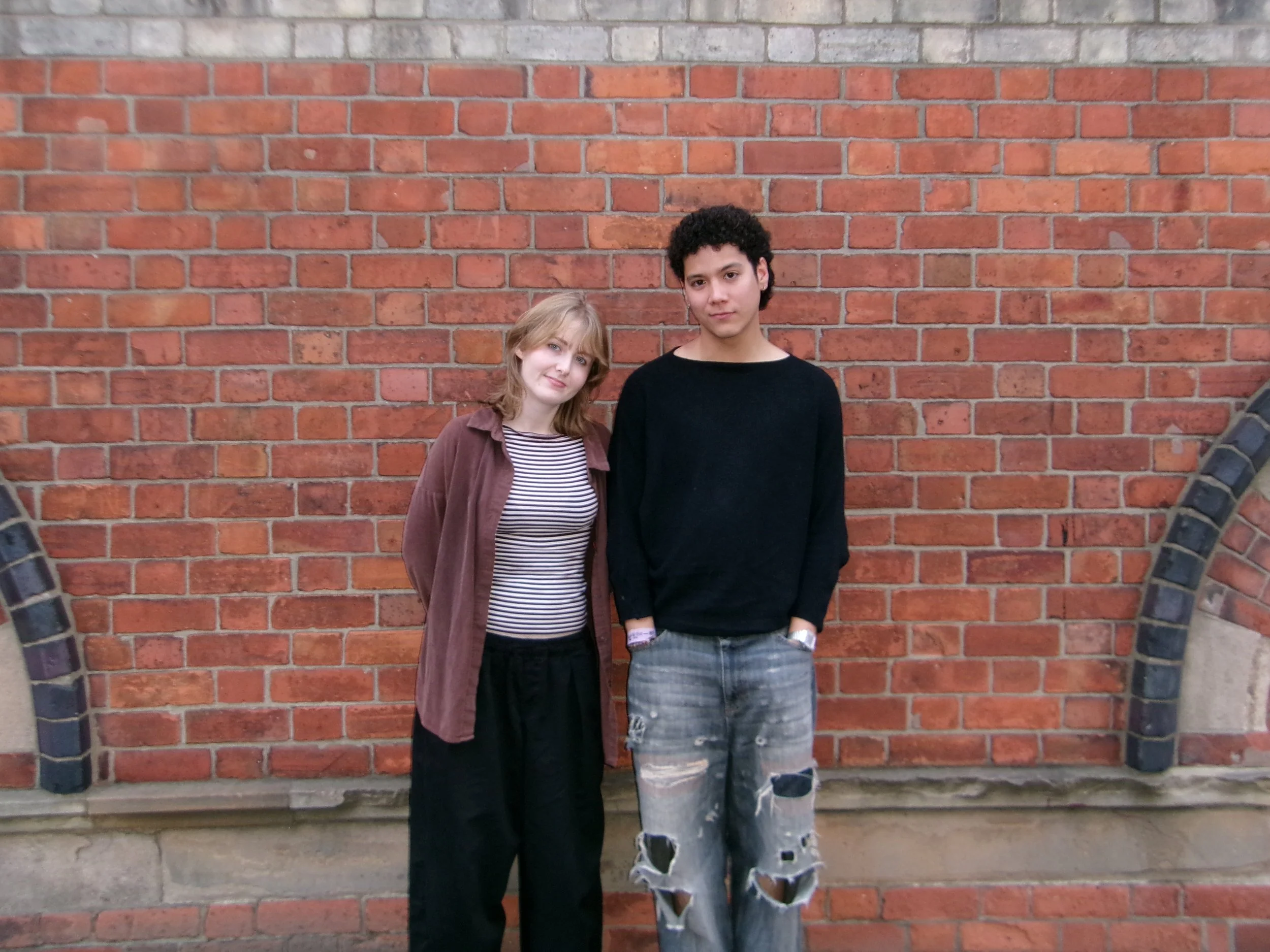
BURGLAR
Your Other Voices set was my first time seeing you perform live. Is there a reason in particular why you choose to layer everything live with a soundboard and synths instead of just having a backing track?
Willow: Yeah, that was our first time playing with that setup. I usually have the synth and I like the synth because it's the Arturia MicroFreak. I really like it because it can do so much and it's great for learning about synths. You can kind of change sounds however you want. But that was my first time using the sampler that I had, mainly just using for beats. I was thinking during it that I could actually use it to stack up more samples.But I never really want to play it completely as a backing track because I like the feeling of doing it live. It leaves a little more room for error. I think people like seeing you doing stuff instead of just turning it on and letting it play. I almost wanted to start using the pad and start drumming it. I'm not good enough to do that yet, but I think I could get to a point where I could be like those producers online.
For songwriting, do you write lyrics together or do both bring something individually first?
Eduardo: Usually separate. Yeah, trying to change the process a little bit.
Willow: Yeah, we're trying to get more comfortable doing it. Sort of, I don't know, writing together. But it's hard. Eduardo writes a lot of the lyrics.
Eduardo: Yeah, words are difficult to do together, I think, usually.
Willow: Also, because the lyrics can be so pour your heart out. If you come to someone and say, here are the lyrics, then it kind of feels less personal than making them up on the spot in front of someone.
Eduardo: If we were to do it together, it would be about slightly different subjects.
Willow: It'll usually just be like finding lines to put in certain songs that are already pretty much finished. But starting a song from scratch, writing the lyrics together is not something we do often.
Eduardo: We're going to try to, though, because we're kind of bored.
Is it normally you have lyrics first, or is there like a guitar line that leads things?
Eduardo: Usually it's guitar with vocals. Sort of humming. I usually come up with stuff while thinking of the melody. So I'll sing a melody in my head, and then I'll just sort of find the chords.
Willow: But sometimes I can start with a line that's cool.
Eduardo: It's like what Paul McCartney, when he wrote Yesterday, “Yesterday” is like “scrambled eggs”.
What sort of musical influences do each of you bring to Burglar?
Willow: Eduardo is much more influenced by music before 2001. And I grew up listening to indie music that was coming out at the time, whereas as a teenager, he was very much listening to 90s rock. It's changed now, because now a lot of your influences are very pop, but cool pop.
Eduardo: There's an artist from Brazil that I really like called Bruno Berle. There's a scene from the northeast of Brazil that I think they really tapped into with the sound specifically. The textures, the sonic elements… Everything just, to me, seems completely brand new, because they make 60s Brazilian music, which tends to be quite intellectual and traditional and difficult to do, but they made it really loose and pop. So I would recommend Bruno Berle’s three albums they released since 2022. I love him a lot. I can't stop listening. There's another guy called Nyron Higor. They all play together in the same band. If they play live solo, they'll be in each other's bands, which is very cool. And then there's this other guy called Batata Boy, who is the producer. He seems to be quite tapped into contemporary pop, lo-fi beats, but then they make Brazilian music, like 60s Brazilian music, with the same sort of love themes and stuff, but with a contemporary sound. And that's what I listen to mostly. It's my favourite thing.
Willow: I've been listening to a lot of Frog recently, because I went to see them in the Grand Social. And it was so good! And all I've been listening to ever since is a load of Frog. It's such a funny band to keep telling people that, because it's one of those bands where you say, oh, I've been listening to a lot of Frog, and people are like, “oh, Frog? Who the hell is Frog?” Or they'll go, “oh my god, I love Frog.” It seems to be the same kind of crowd who's listening to a lot of This Is Lorelei, which I've been also listening to a lot of. I came back to Wednesday, I sort of stopped listening to Wednesday for a while, and now I've been listening to loads again. When we were at Great Escape, we just happened to wander into this room, and there was a band playing called Glasshouse Red Spider Mite. Terrible name to try and find on Instagram later. But it sounds like a load of music stitched together that I love. So many of the influences. Because I love a band called DIIV. They sound like them, but they also do like slowcore, but also shoegaze… they're a very good band.
When you're with your band have you got any pre-show rituals that you like to do before performing?
Eduardo: No, I don't think so. We should though. We should come up with something, like a chant.
Willow: We were in Workmans the other day. Me and John who plays bass with us were in the mirror fixing our hair for a solid five minutes, both of us. Maybe it's that. Maybe it's fixing our hair.
Eduardo: And I do a backflip.
Willow: And you do a backflip.
Eduardo: I wish I could do a backflip. So maybe I'll learn how to do a backflip.
Willow: He's going to learn how to do a backflip and that will be our pre-show ritual.
You just released your new single ‘Cappadocia’. Can you tell us about the writing process behind that?
Willow: It started as a sick riff.
Eduardo: It started with a sort of Gang of Four riff. I liked this band from England, The Lounge Society. Great, great band. I don't really see them around anymore. But they have this sort of blue album that I listened to a lot. And I was like, oh, they sound like a post-punk band. They sound like Gang of Four, but today. I remember listening to that and thinking, oh, this is a really cool direction. You can do this sort of new wave kind of music. But in our own way. And then, that's where the riff came from. I was just trying to do what that band did on that record. And then, I had the riff and I had the melody of it. And then, I had the bass line as well, a sort of disco track. And I wanted us to be a disco band. I wanted us to do sort of weird, new wave disco.
Willow: Yeah, I remember being in the rehearsal when we finally cracked it to play it live and it sort of went away.
Eduardo: And then there was a sort of twangy riff, but with a rhythm guitar over it.
Willow: That was it. The rhythm guitar was what made it.
Eduardo: But that took me like a year and a half to write. Because I had the riff and I was like, we're never going to play this song because I can't play the riff and sing at the same time. Then Willow started playing the riff.
Willow: And it would be okay.
Eduardo: And then I wrote the rhythm section first and we would go back and forth from it, which created a really cool dynamic. It's pretty much our favourite song. But Cappadocia is from 2023. Yeah. All those songs in the debut album are quite old.
Do you still feel energized by those songs and enjoy playing even though they’ve been around a couple years?
Willow: It goes through phases. There's some songs that we get really sick of but then we sort of come back around to them. Actually, we played a song in our Other Voices set that was very old. Called ‘Nobody Needs to Know You're Desperate’. We don't play that a lot because we got sick of it. But it’s still a pretty song.
Eduardo: Also it doesn't sound like what we want to do anymore. At some point I got really into the idea that we need to be a twee band. Because I really like Delivery Service. And I like the simple riffs and words. I just want to focus on words and melody and then guitar comes second. At least with this patch of songs. Everything now is us trying to be twee as much as possible.
Would you say that Cappadocia is the song that most represents you as a band?
Willow: I don't know. Well, it's the third single that we've released from an album that will come out next year. And all of the singles showcase a slightly different part of our sound. And I think Cappadocia is the same. It doesn't really encompass the entire thing but it is an aspect of it.
Eduardo: I think that the coolest part about this album that we finished recently is that it's like a tribute to all of the indie music that we love. There's a song that sounds like The Smiths, there's a song that sounds like Nirvana, there's a bit of Strokes… just the heavy hitters that we love. Weezer and stuff like that.
Willow: They all sound great. And the album is sounding complete.
Eduardo: They are tributes to all of these different pockets of scenes that I grew up loving.
Is it ever difficult to know when a song is finished?
Willow: I guess when you start playing it live and it kind of sticks in a certain way you kind of just get used to it.We have a song on the album called 23 and recently it was slightly different recorded than how we were playing it live and we've just started to start playing it live like it's recorded and it's still weird and I'm still not really... I keep forgetting parts that I'm supposed to do.
Eduardo: I think the production is very difficult to figure out when it's done. The song is finished. I usually know that the song is done. But the production aspect of it… like should we add reverb to this? Should we add another hook to this? I think that's quite difficult for to know what is right and what isn't because it's also our first album.
Willow: We also still have fully songs that are mastered and ready and we'll go and just sing over it and be like, oh look, that's a great harmony. What if that was the harmony? To add new bits on top.
Eduardo: That's also just the way that the songs are. They're kind of like three minute songs that have a lot of vocal hooks a lot of harmonies and stuff. So that's an endless world. You can do whatever you want to that. And that's kind of what I like. I like clever vocal melodies and hooks and things. I like lyrics way more than I like guitar music these days.
And when you're playing them live they can keep evolving.
Willow: You can just do whatever you want. Like we just did. That wasn't like most of the gigs we do but it was fun.
Burglar play a string of UK shows in Manchester, Bristol, Brighton and London, starting from October 9. Their newest single ‘Cappadocia’ is out now. For more information and to support the band directly, visit burglarband.bandcamp.com
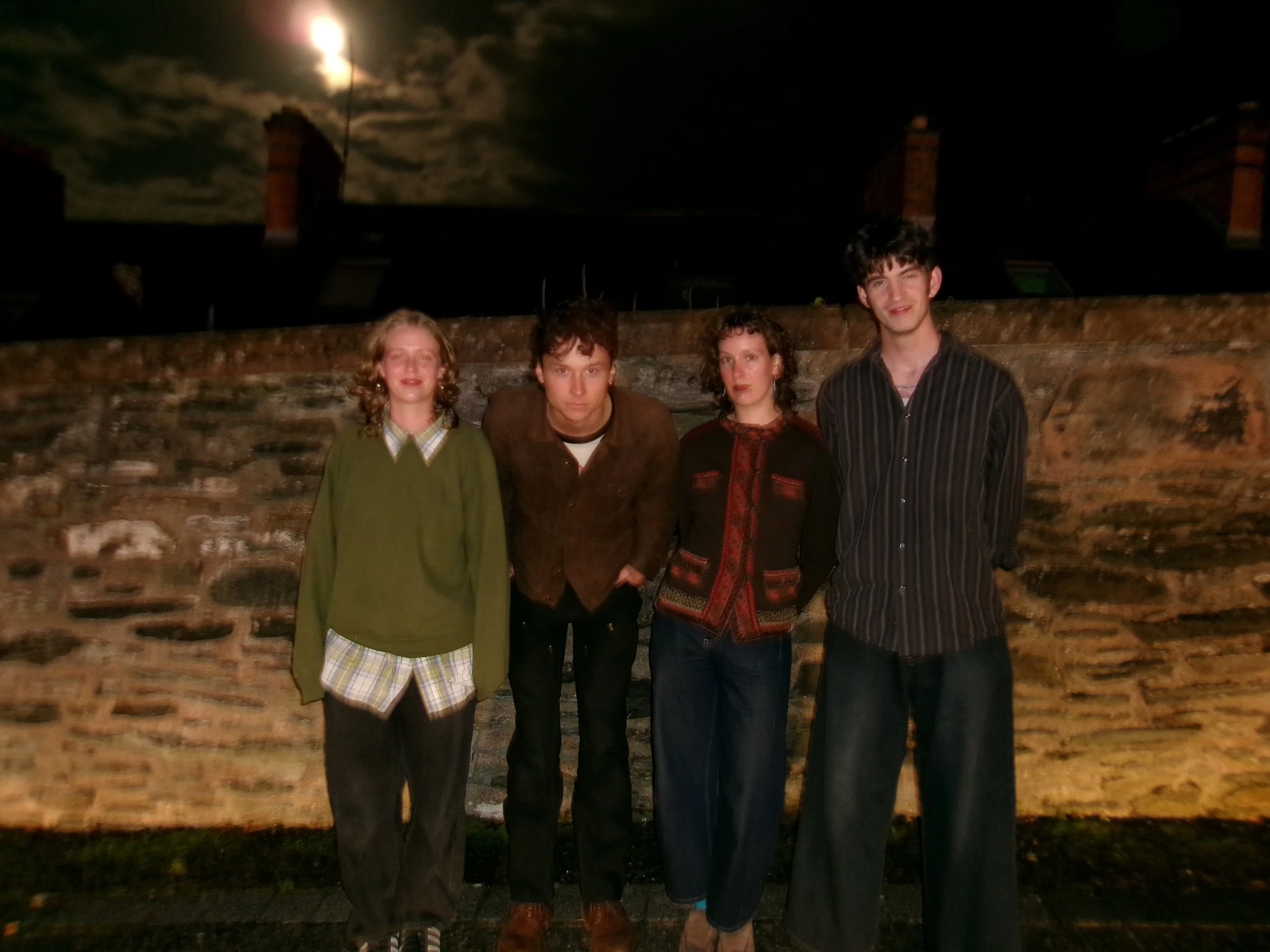
CHILD OF PRAGUE
How are you guys? Other voices in Derry 2026. How are you feeling?
Jack: Very excited.
Miranda: Yeah, excited. Happy to be here.
It's quite obvious recently that Irish music and Irish artists are having quite a cultural revival and it’s gaining attention on a global scale. What are your thoughts on how Ireland could help or support local artists?
Adam: I had a thought the other day. I think if government subsidised practice spaces or if there was a grant for house bands for venues or something like that, that would give people regular income or give people flexibility. So, when they need to book space to practice, it's not coming out of their pockets. I think it would bring a nightlife and a comfortability.My thought is that that's what we're missing- something kind of focused on what are the things that are making it so that people can't keep it up in any kind of feasible way. And how could the government help to intercept that or give them a little bit of help.
Miranda: And things like that did exist. I was with another band and the Arts Council partnered with a women's organisation, and they sponsored practice space in The Complex. But obviously, if The Complex is closed, there's no sponsored practice space anymore.
Ameila: So many nighttime third spaces have declined since the 90s. There used to be, like, 2,000 or something like that, and now there's a few hundred in the country. So, making it easier for venues to exist in the first place. Because then if there's a multiplicity of options for people, there's less competition, so it's just more normal for people to be able to pursue it in the first place, because they actually have the options. Especially not in Dublin, especially in other counties that maybe have one nightclub. You're never going to feel supported if you don't even have the space in which to play.
Child of Prague has been together three years now. Have you any advice for bands starting off?
Ameila: Maybe patience. Because you don't just instantly have a proper musical relationship with somebody. And you may have your own personal intuitions, but you also need to learn how to develop a collective taste, and that takes time. If it isn't immediately, instantly clicking, that doesn't mean that it's not going to work. It probably just means that you have a bunch of different people with their own subjective intuition, and they need to just learn how to play together longer. Whereas people might just think it's not working, but that's not necessarily true.
Miranda: I also think- kind of more of just observing a trend as opposed to giving advice- but it really seems to be working for people who start gigging and just gig and gig and gig and build up loads of interest before they think about releasing music. I guess that kind of speaks to building your musical relationship first, but also to just building intrigue and a buzz. People in Dublin love going to gigs. It's been my experience, especially coming from London. It's a really nice difference that people just will just come out and go to gigs- people who can afford it- and that that's the way in as opposed to having a bunch of releases and then getting on people's radar. It almost feels like it's fighting back a little bit at the streaming culture because there are so many good bands in Dublin who don't have music out and the only way you can go and listen to them is going to their live shows. I think that's kind of awesome, actually.
Ameila: Yeah, that's so true.
Miranda: Like with Mount Pyrus or Existing Conditions. They're both bands that have music I love, and you can't find it really online yet. That's such an incentive to go to their shows.
Adam: I think that's not how we formed a band, we put out songs before we had gigs. It’s hard to know what works. And to know how early do you think about it in terms of a business. At the start, we were just kind of having fun. We weren't thinking too much. I think it's fun, to go off what Miranda said, when you're starting to say yes to it all, especially when you're at those early stages where you can get away with being a bit clunky, you can get away with doing different types of setups and gigs. I think that's a really fun time. Say yes to everything, that would be my advice. It worked for us, and it was a lot of fun to do. We’re really thankful to all the people that offered us those gigs at the start, everybody that would just get us into rooms to play with amps.
Jack: I would say resilience as well, and the same thing with patience. There's not a reliable constant feedback or positive feedback and a lot of the time you don't really know where you're at or how you're doing. It's not a linear progression of growth or money or fans or stability or anything like that. Keep at it even if it doesn't feel like you're getting anything out of it in the short term.
Is there anything you guys have learned about each other from spending a lot of time together as band?
Miranda: I don't know if everyone feels this, but I feel like I've never known, next to my family, I don't feel like I know this much about anyone. Not in, like, a weird or over-personal way. Like you're travelling together, everyone's carrying heavy stuff, everyone's back hurts, no one has any money.
Jack: There's so many waves of emotions.
Miranda: Maybe someone had a bad show, someone had a great show, and you're really seeing people all the time in, like, the extreme...
Ameila: Through everything.
Miranda: People respond to those kind of situations in different ways... It's been great for me on a personal level to get to know people so well and understand that different people work in super different ways. And if you can stick that out and learn that about people, then I think the art-making process gets so much easier. Then you just have an understanding of people in a very whole sense, which is amazing. I'm super grateful for that. Hopefully it’s the foundation of a long artistic collaboration.
Ameila: I think when you're writing music with people, and your music is just mildly confessional or in some capacity drawn from your personal experience of something, it kind of necessitates having really, really open relationships with people. I think the band has taught me a lot about how to become a much more open person in a vulnerable way, but nt in an over-sharing kind of way. It teaches you a lot about human relationships, and also in its own way teaches you a lot about how you navigate your own friendships with people, because it is just by virtue an extremely, extremely close friendship. You're sharing with people creatively, or you're maybe sharing your own creative work, which a lot of the time can be sensitive. So it's been a really nice way to have really open relationships with people.
Jack: If you want to open up that song creatively to other people, it is helpful to be able to express what that song means to you or what it's about in a way so that the other people can best approach the song in a way that's going to suit the song and go along with whatever emotion or kind of message or what you were feeling when the song was written. But that's a hard thing to do and a very kind of vulnerable thing to do.
Adam: I think what's interesting is that we were all musicians from different areas and we all wrote and played in different groups, but it's the first time that any of us have been in something where it feels solid. So, not to sound overly sentimental, but in that way we're growing through those initial moments and processes. You're figuring out your confidence on stage and how you relate to yourself and your self-image when you come off and how you feel. And then you're realizing how other people are getting affected by that. It's all these things you just have to learn by getting through it. We've been thankful that we've had three years now to get to know those loops. To figure that out together, I think, is an interesting thing.
Ameila: One other thing that's kind of come into my head is that when you're in a band it is quite different to being a solo artist. I've found that we've learned a lot about de-centering ourselves, because it's about a collective engagement and a collective group process. It's one thing that we talked about as we were writing more and more music. All of us are songwriters, all of us are bringing different ideas, or fully-fledged songs, and it was like, how do you navigate that kind of dynamic? Like, is that that person's song, and, the band is working around it? We agreed, all of us, that once you open up a song to somebody, it's not yours anymore- it's the band's song. It does make you really de-center yourself, which can be a really valuable thing. It also allows you to be much more open to criticism in a much more neutral way. I think that's been a really valuable aspect of being in this band, specifically. People naturally tend to feel so personally tied to what they come up with on their own. I feel like bands lend themselves to that, which can be a valuable thing to learn. Some bands have a natural front, but all of us sing, so it's a different situation.
Miranda: I think there's a natural desire to say, like, who's your lead singer? Which is obviously a super valid question, because most band structures are like that. But I think it's super nice to have it more communal, and obviously loads of other people do it, but it does still feel like it's pushing beyond the image of a band with a front.
What made you decide to rework the more traditional songs that you perform, like ‘Cooleys’ Reel’ and ‘My Darling Asleep’? Was there any particular inspiration behind this idea?
Jack: Back then, in early days of Child of Prague when we started playing Cooleys’ Reel, we still very much had kind a singular mindset towards the type of music that we wanted to make or that we were making at the time, and then that just very much kind of got absorbed into just two electric guitars, like, playing the main bit, and then everyone else behind it. I think it was because we [Jack and Adam] both knew Cooley’s Reel, right?
Miranda: Isn't there a video of you [Jack]...?
Adam: Well, we both knew… I think what was funny is, I had learned it and played it on this tuning, but then, as I was doing that, Jack was able to play it! It was kind of a serendipitous thing that it just happened to be the one reel that Jack had learned at some stage. We went back and found a video on Jack’s Instagram…
Jack: Yeah, I was, like, 12 or 13 playing it! It was on an acoustic guitar, and I was playing a slightly different version of it, but then I adapted it a little bit to the way that Adam plays it, and it's still slightly different, and we both play the melody lines, which I think makes it kind of interesting. We both have kind of stuck playing it the way that we learned it.
Adam: That's why we chose Cooley’s Reel, and then the other ones are just...
Ameila: They’re just beautiful tunes.
Adam: They’re tunes that we hear, and we're like, we love that.
Ameila: Yeah, I think it's as simple as just hearing something really beautiful, and seeing that the arrangement seems like it could be quite flexible and forgiving.
Miranda: I think we're definitely still tussling with it, especially with trad tunes. Cooleys’ maybe came at a time where we just went for it. We were just saying yes to everything. Which was awesome. But I think now... we haven't fully evolved our process with how we approach that. And I guess it's an out of respect to genres. How do you continue paying respect to legacy genres? Like, how do you pay lots of respect to a genre whilst also not taking it too seriously? It’s a fine line to tread, and everyone has different opinions on it. And I think we're still tussling with that process, which I think ultimately is a good thing. What I'm getting at maybe is, with Cooley's, there wasn’t much thought process there was behind it, apart from, “this is really fun! Let's freaking go for it.” And I think now we've probably all become a little bit more sensitive in how we approach music in general.
Do some of your older songs still resonate with you emotionally when you're playing them?
Jack: I think that it depends how you approach them. It's very easy to fall into a lull or go through the motions, especially having played the same song so many times. I think, personally, I do still feel myself feeling at least some semblance of the things that I did, if it's a song that I had a part in writing and can really kind of tap into it. And sometimes I'll be like, oh, I've lost touch with this song. And then we'll perform it, and then I really feel it again. So I guess it kind of depends. But it is really nice when you still do feel a connection to a song that you wrote a while ago.
Adam: Yeah, I agree in some ways. I think it's really nice to play the new stuff, but I haven't fallen out of love with the old stuff yet as well.
Ameila: I think as well because we have very melodic parts on our instruments, sometimes if we do feel like a song is beginning to feel a little bit monotonous or something, we rearrange it a little bit. Not to the point that it's completely new, but just to the extent that it feels like another kind of musical or creative challenge so that when we're playing it, it still feels a bit more engaging. I think there was a period where, just through, very natural, temporal constraints, like all of us were in college, didn't have maybe the same amount of time to be writing. Because we didn't necessarily have a lot of new material, we were working always with the stuff that we had written already. Reworking it was a nice way to prevent those feelings of monotony.
Miranda: It's funny, me and Adam were talking about this today. This Autumn has probably been the most shows we've played in a while, back to back, and I think all of us get quite hungry quite quickly for new… even if it's just new inflections on old songs. We were just having that conversation today of how do you shoehorn a bit more improv onto older songs or make space in them for new ideas. Also I think the most entertaining music to watch is when you can see musicians reacting to each other in real time. And how do we cultivate a little bit more of that? Because we obviously all listen to each other super hard. I think that's an avenue for exploration, maybe.
Child of Prague play at Left of Dial Festival in Rotterdam on October 22 and support Gurriers at the 3Olympia on November 1. They also have a headline show in Whelan’s Main Room on December 8. For more information and to support the band directly, see childofprague.bandcamp.com
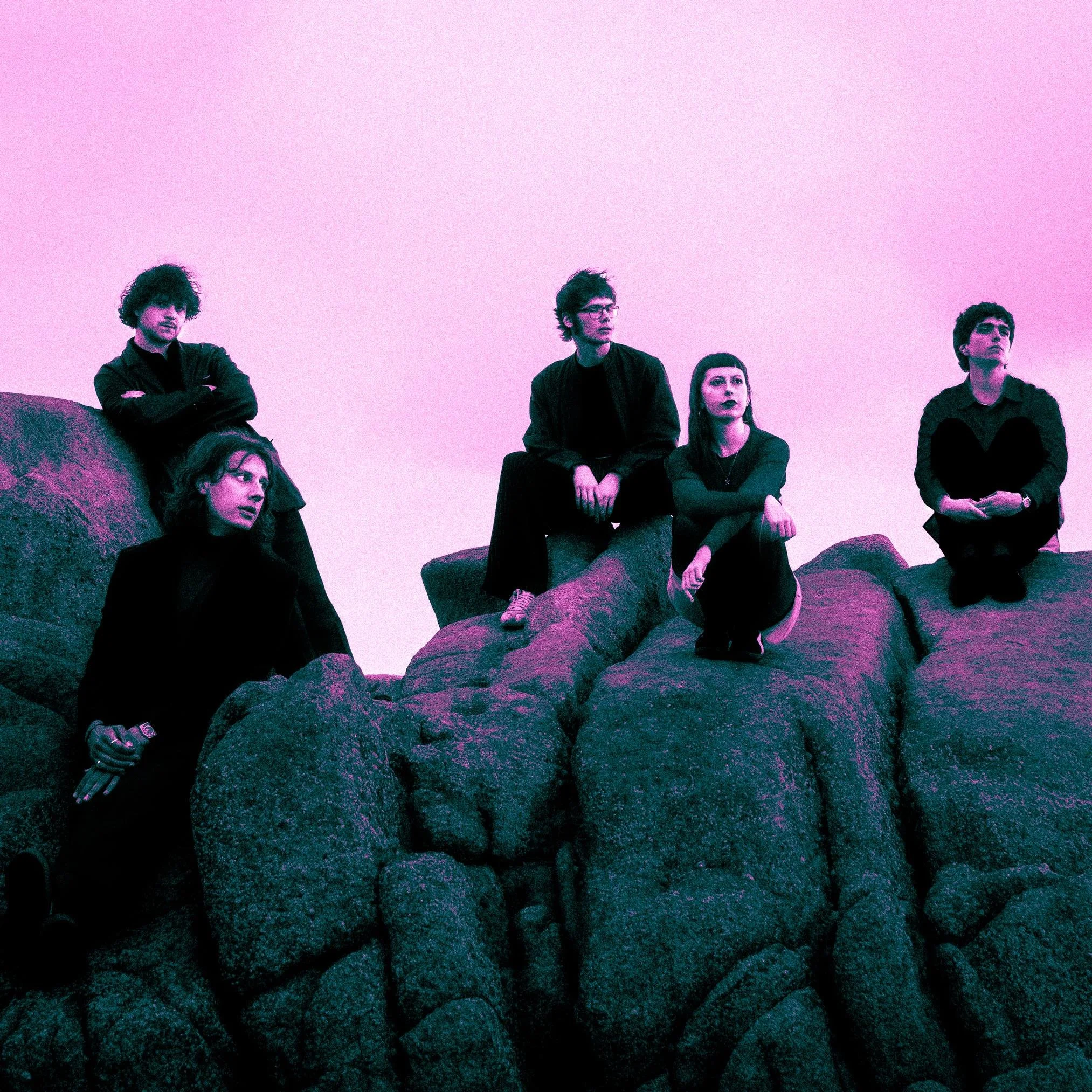
THEATRE
Other Voices Derry, 2026. How are we feeling?
Dara: Pretty good, yeah.
Gerry: Absolutely.
Dara: We had a nice time last night, the gig went well. And we all got well rested, so pretty happy, yeah.
You’re headline tour of the UK is coming up in October. How are you guys feeling for it?
Dara: Yeah, It's our first time headlining shows in the UK, so we're really excited that we've gotten to this point. A couple of the shows have already sold out now, so it's really exciting and we're looking forward to playing the gigs and trying out a couple of new things.
Gerry: Having our friends SELL EVERYTHING on the tour as well will be fun. Yeah, we're really looking forward to it.
Oscar: We'll have potentially too much fun.
Gerry: We've been on the road gigging for a while now. We've been building it up over there.
Oscar: It's been steady prep for maybe two years worth of gigging. It's kind of led to this point, I would say.
Dara: We went to the UK at the start of last year, which kind of in retrospect actually doesn't seem like that long ago, but we've done intense tours, supporting bands, but in between we've always been kind of going over there, playing shows and doing support shows or festivals and stuff. So we've done a lot of work, but also now that we have a body of work, of music that's out, you're able to see there's a bit more of a demand.You can see where the demand is across England for what people are listening to. I think kind of a combination of all those things kind of led us to be like, right, let's start putting on our own shows. We've been to a lot of these cities a couple of times now, and people are starting to ask questions when we're going to try to do a gig there. So time has come now.
Was it important for you to get comfortable as a band playing live before going out on your own tour? Or to get comfortable playing different spots first?
Oscar: I think, yeah, definitely to a degree. I think maybe, you know, when Dara was saying when we first went to the UK, it felt a lot more, maybe daunting isn't the right word, but it felt bigger than it feels nowadays.
Dara: We were inexperienced, I think, at that time.
Oscar: Big time. So I think those tours with Gurriers and then with Bleech this year were so incredibly beneficial to just us as a live unit, but also us as just a group of friends on the road all the time. And I think at the moment it feels weirder not gigging. There's a certain rhythm on the road we have nowadays. It's just really nice. I think we just want to keep doing it, you know?
Was there anything in particular that you learned about each other living closely together while touring?
Oscar: Yeah, we're all really funny.
Dara: Yeah, I suppose one of the more straightforward things that we've learned is we kind of all share the same pre- and post-gig routines. Yeah, I mean, we kind of like to relax ourselves, but also get the energy up before a gig and after a gig. I think we all stick to each other in whatever it is we do, but I think it’s nice that we found a bit of a flow that helps us get in and also out of a show.
Oscar: Yeah, we definitely come to understand each other's needs as well a lot better because it can be difficult spending so much time, even with people that you love, for so long. We all know that maybe Sean might need a walk after the gig or I might need to, I don't know, go call a friend or whatever. It's just those little things that we've grown used to.
What does your pre-show ritual look like? Is there anything that you normally do or any songs that you play?
Gerry: We used to play a Cowboy song there for a good while before going on stage. I think we might need to bring that one back actually.
Oscar: There's definitely a difference in the gig when we remember to bring a little Bluetooth speaker into the green room.
Gerry: Yeah, we're really bad at that. We're so bad at that, honestly.
Oscar: We just do a lot of jumping around and getting the heart rate up.
Dara: We do a bit of stretching.
Oscar: Even if we're not necessarily going to go absolutely crazy on stage, it's just nice to have that freedom of movement. It just helps to center yourself.
We’re all aware Irish bands and Irish music is having a cultural moment worldwide. Is there anything in particular that you think that the Ireland should do to help or support Irish bands?
Dara: I think support small venues, grassroot venues. That's all it needs. And the bands will come.
Oscar: It's all there. There's a million answers to that; the question of why is the Irish music scene so rife. That's where it starts, is just the grassroots. Just supporting those a bit more, because you don't get any of those bands without playing in all those venues. There's just not enough. That's really it.
Dara: That's it. The more venues that are available to people means the bands will come. They just need the opportunities and the spaces to grow.There's always been great bands in Ireland, but I think now more of an international look is catching on to that. I'm sick of seeing venues close down over the last few years. We need to keep them open.Put more money into them, I think, is what the key is to supporting the Irish music industry.
Oscar and Dara, are there any Limerick music scene memories that stick with you, or any venues that you'd like to share?
Oscar: The Commercial would be our close friends, but also Pharmacia was a really good small venue you could play your first gigs in.
Dara: I remember we had a pretty fun, weird gig in UL that really stuck with me.
Gerry: Oh yeah, in the stables.
Dara: That one really stuck with me. It was a very interesting set up of people. It was a construction of so many different types of people at one gig, and I hadn't really come across that before.
Oscar: It was definitely this sort of weird crossroads between all of our fun Limerick music scene friends and all of the “UL lad” crowd. But they all still happened to like it. I remember we played ‘Whiskey in the Jar’, which really brought out a good vibe from everyone.
THEATRE begin their headline tour of the UK on October 5, with dates in Manchester, London, Bristol, Sheffield, Birmingham, Norwich and Southampton. Their newest EP ‘Incarnate’, released in June 2026, is available to purchase on vinyl from Bandcamp. For more information and to support the band directly visit theatreband.bandcamp.com