
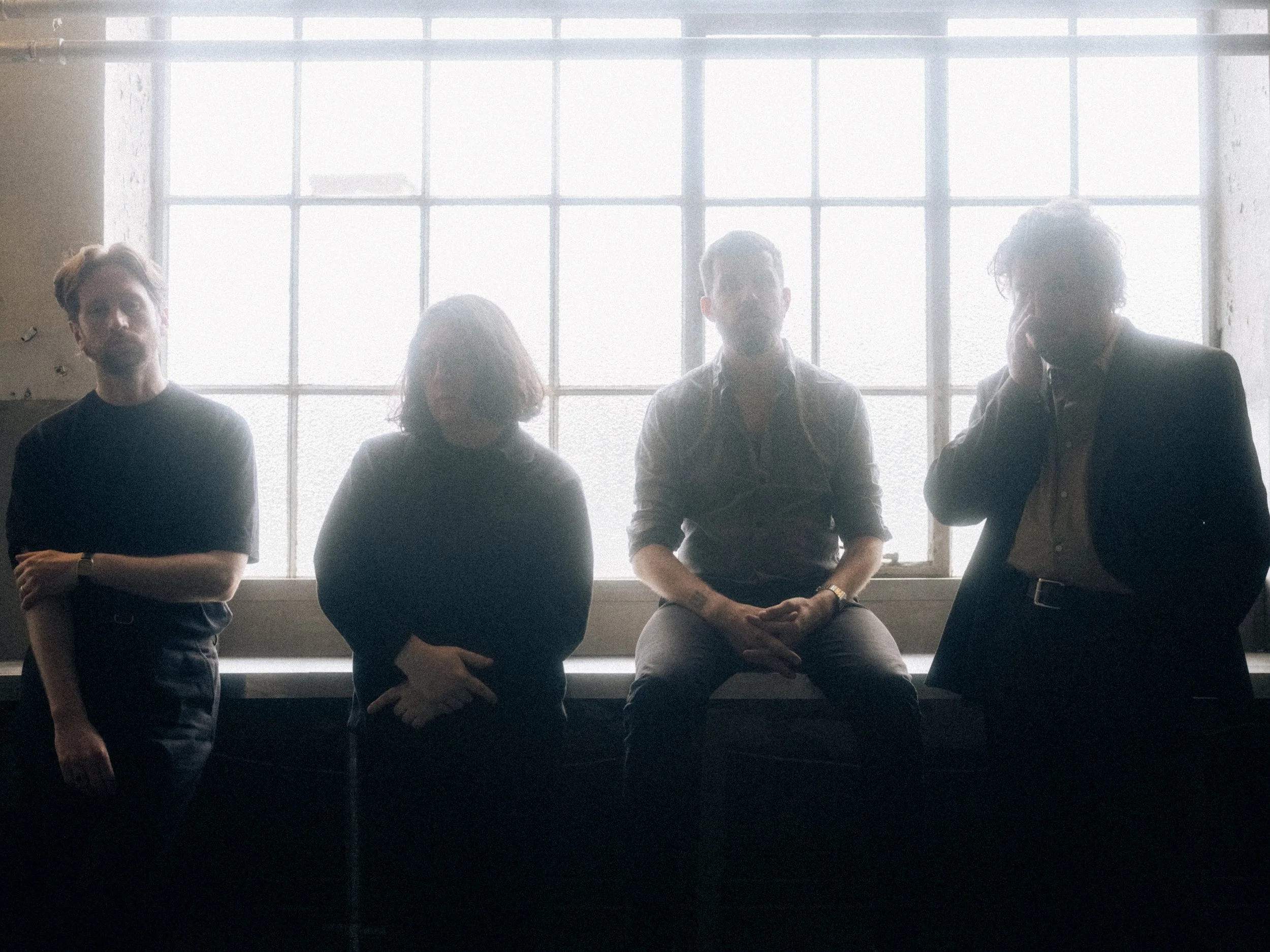
GILLA BAND
Words: Sharymayne Dulligan
Gilla Band stand as titans in the Irish independent music scene, pioneering their own distinct brand of absurdism and dissonance. Gilla Band has never conformed to commercial expectations. In the band’s fourth studio album we are privy to a gorgeous kaleidoscope of corrosive soundscapes, crunchy drum machines, and Top Cat references. We caught up with Dara Kiely and Daniel Fox to discuss the anatomy of Pugnello.
Talk us through the four year progress from Most Normal (2022) to Pugnello (2026). Is this album something that came up out of the blue or was it something that you guys decided to go back into the studio and start working on after Most Normal?
Dara: We were pretty quick to start writing. We wrote Giraffe pretty early on. Most of it was pretty much straight after the cycle of the last record. We were just very slow, so it took a lot of time. Well, I did a lot of lyric writing at the very last minute as well, but yeah, it was a cool process. We got new instruments and turned our practice studio into a really good demoing space, then we were able to chip away at it. It didn't have to be all four of us in the room. It was two of us or three of us or all of us trying different things and the best idea in the room was the outcome, really.
It’s interesting that Giraffe was the first song you guys put together in this process, was it a purposeful choice to use that track as the first single for Pugnello?
Dara: No, it's just like we didn't really know what to pick for singles. We felt we had a couple of ideas for it, but it just happened to be the one that kind of represents and gives a good example of the rest of the album. So it made sense for us to do it that way, but it wasn't like we'd written our first single and our first song or anything. I think it was just a coincidence, really.
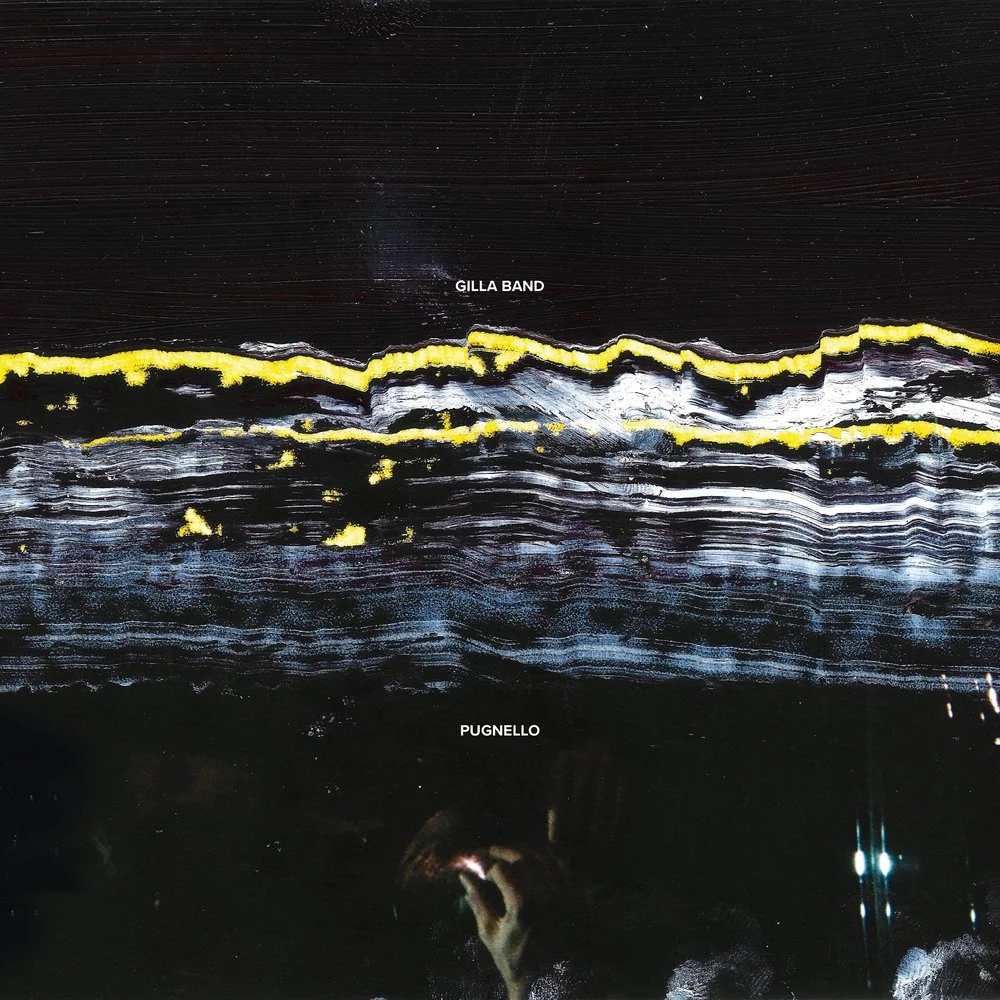
What are some of the sonic references you guys used for Pugnello? It seems like you are at your most abrasive yet, so where are these new sounds coming from?
Dara: We got this really cool drum machine called Erica Perkons (HD-01), and that features a lot on the record. We always loved the idea of mixing live acoustic drums with drum machines. So that was a big thing, and then we just got a lot of new pedals and stuff, so we're just trying to mess around with them. Then, like, slowly but surely, things started to take a bit more shape. So it wasn't any kind of, like, particular records that we based it off, like, the sound of the music or whatever, but there were a lot of new things to play with. That's what really excited us, and we kind of got a buzz off just exploring that avenue, really.
Daniel: I think we were getting more of a kick out of what we were doing ourselves than wanting to try and emulate other records or anything, you know what I mean? I felt like we were kind of, kind of breaking enough new ground on our own, that we didn't really have anything we were particularly trying to, like, emulate or anything like that, you know?
Lyrically, this album truly stands out. I'm a very big fan of the idea of stream-of-consciousness writing, and you guys use that quite a bit. So chat me through that as your process. Like, is it just something that you've always done, or did you come around to a stream-of-consciousness?
Dara: I kind of just love approaching lyrics in different ways. So, like, I'd take notes all the time. I'd have a couple of notebooks or take it on my phone. I do this thing called, have you ever come across morning pages? You wake up and you write three pages or whatever, I try to do that. What I would do as well is I'd write a demo track at home for myself, and then I'd harvest, like, the melodies or the lyrics I like for Gilla Band tracks. So, like, the giraffe one, I had that whole melody and most, if not all, the lyrics for that done on a very crap instrumental because I can't really play anything, and they can play stuff. So I didn't, like, bring it into the band and say, we should work on this, but I kind of took what I liked about the track I did and, like, used that because I hate writing on blank pages, it kind of freaks me out. Then, like, the theme of it is kind of trying to document where I am in life.
In the four years that happened, my dad passed away, and I got diagnosed with schizophrenia. So I was writing, not about him as a person or a man or anything or a relationship, just literally about grief and how unique it is for everyone. That was kind of fascinating. I kind of fell into how I coped with stuff as a kid was, like, comfort things. So, like, cartoons and football and Power Rangers and stuff kind of came up a bit. That and then the schizophrenia thing was just, like, terrifying to hear because I've been well for the last, like, nine years, but I didn't want to ever be diagnosed because I was just too scared of it. Then I was talking to somebody that also has this condition, and I was very interested to see what their reaction was, and they said it's going to be crap for a week or two, but you'll notice it gives you, a sense of power to know yourself more and what triggers you, like, what you shouldn't do and what you should do. The lads are so supportive about the whole thing. So for a track like Alogia, the third track, Alogia means poverty of speech. So we liked that idea, but I wrote very directly straight after my diagnosis about the reaction of it, and it came out very straightforward. I really love silliness, and I think it's kind of gas that, like, you can shout about crisps.
What is the story behind the name Pugnello?
Daniel: It's a font on a haunted laptop.
Dara: Yeah, basically, my uncle writes a lot of horror fiction books, like you do, and he has this book, and I think the premise of it is someone gets a laptop that has a haunted font, which is called Pugnelllo, and he makes them write scarier stuff as it goes on. I've yet to read the book, but it's, yeah, it's a wild, very fun concept. He doesn't know that I've used it, I don't really know the man, so yeah, we just thought it was funny to call the album Pugnello because of that, and we also didn't have any other titles at all. So it wasn't even the best of a bad bunch. It was just the best that we had.
How are you getting ready to translate Pugnello in a live setting? I’m interested to see how the introduction of drum machines can be integrated into the live arrangement!
Daniel: A lot of it is kind of like practical, logistical things, like getting everything to kind of talk to each other and getting it all very locked in. It's also kind of just a rehearsal, you know what I mean? We, you know, hit the thing and it comes out of the speakers and we play, you know what I mean? So it's kind of just a lot of like drilling it, getting comfortable, you know, a little bit of trial and error. It's different, but we don't have to completely relearn how to play together. We've been playing together for a long time anyway. So it all still feels natural.
What’s next for Gilla Band?
Daniel: We've a bunch of tour dates coming up. We're starting over in the States in October, then we'll be hitting around Europe and everything, kind of like from mid-January onwards.
Pugnello is out now on vinyl, CD and digital. Gilla Band play Vicar St on Feb 27th. www.gillaband.com