
THOMAS DOLBY
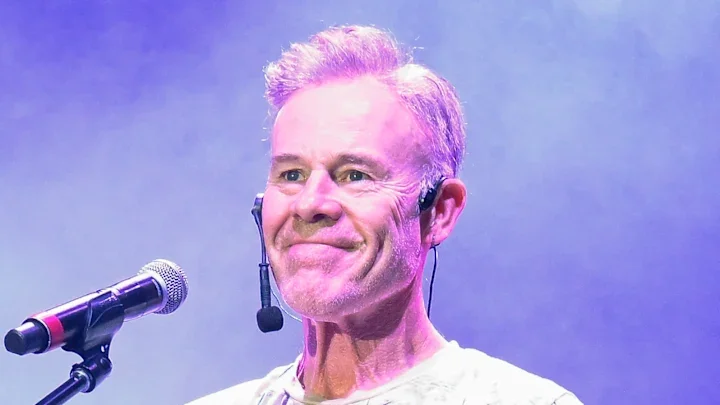
Synth pioneer musician Thomas Dolby has announced that he will bring his brand new show Iconic 80’s Recollections to The Academy, Dublin on Friday May 29th 2026, joined by special guest Martin McAloon (performing the songs of Prefab Sprout). Ahead of the show, I spoke with Dolby about his legacy, the evolving language of music and AI, and how the past continues to echo in the present.
Your new tour is titled Iconic 80’s Recollections. Do you have a favorite decade you look back more fondly to, or are you just living in the moment?
T: I try to live in the moment. In some ways, in the 70’s, I had no worries, really. I was a teenager. It's when I loved music. A lot of the music I was into was quite obscure. It was cool when I found something that my friends didn't know about. In those days, you would show up to a friend's house with a bunch of LPs under your arm and say, “Have you ever heard of Captain Beefheart?” You would put it on and then study the lyrics and the credits. You would read the interviews of artists and see if they're coming through, playing a concert.
Music was a lot more rarefied in those days. In the 80’s, the music industry became a lot more corporate and commoditized. The record companies started to figure out that they could spoonfeed you their priority artists every month and make sure they're on the radio and TV. If anything, MTV, which of course was very corporate, was also a bit of a disruptor, because if you had a cool video, it would get played on MTV. The radio stations followed what was happening there and it stopped them from becoming too generic. It diversified music a little bit. I think between that and the new technologies like synthesizers, drum machines, samplers becoming available, music was surprising in those days, because you never knew what you were going to get.
Prior to the 80s, there hadn't really been good recording studios in a lot of countries. There weren't great recording studios in Africa or in the Caribbean. As those studios became more common, you would start to hear international music well recorded for the first time. So those influences were coming into western music as well.
You talking about international music becoming more accessible made me think of the new Gorillaz album that I was listening to shortly before our interview. It includes lots of international artists that would not have easily connected if they lived in the early 20th century.
T: Yeah, I think it was great when those more indigenous styles of music started to become an influence. You know, the Brits have always been very good at plundering stuff from around the empire, bringing it back, putting a spin on it and then re-exporting it to the rest of the world and having people go, “Wow, that's really original.” [laughs.] That's something we've been doing for centuries.
How did the idea develop for your new tour, and how did it take shape into what it is now?
T: I quite often tell stories and anecdotes when introducing songs in my concerts. Sometimes, I'll unpack them and play a few of the chords, or explain how I came up with a melody or a lyrical idea, taking the lid off some of my creative process. I found, increasingly over the years, people that are still focused on 80’s music. They're interested to know the background. Maybe they heard it at the time, they're aware of the song, but they didn't pay much attention to the stuff that was going on in the background. Again, I think it's the fact that music was more rarefied in those days. Today, you've got endless distractions. You are a minute into a song and suddenly your feed shows you something else, like a zebra being eaten by a python, and you click on that. The tendency is to get distracted by all of these different stimuli coming in. Fans of my music and some of my contemporaries like the fact that they can focus their attention a little bit more and see the different layers of how something was put together.
With this tour, I'm building up towards a show that I want to do at the end of this year or maybe next year with a symphony orchestra, where I would be narrating my story of the decade, quoting and hinting at various musical influences and parts of my music, like other people I played with, produced, or played keyboards for. Just to bring all of those quotations in and show the narrative of the decade for me. This tour really is a precursor of that. It's trying out some of that material with a four piece band and getting my flow together, presenting the structure of the pieces in front of a live audience prior to doing it with a symphony next year.
You also utilize AI in these shows. Can you elaborate on how you incorporate it into your art?
T: I tend to be a glass-half-full type. I tend to look at new technologies and immediately get intrigued by the creative possibilities. I'm aware of the negative feedback that AI gets, both artistically and in terms of energy usage and putting people out of work, but my focus has always been to latch onto a new technology or a new tool and be one of the first to go in and explore how I can use it creatively, and open people's eyes and ears to the possibilities. I never look at the user manual. I just dive in there and start making stuff, and whatever rabbit hole I end up going down, so be it.
I've found AI very useful in helping me stitch together some of these musical influences and ideas, because it's very easy to find lyrical references that, when put together, create something. It's like two plus two equals five. You take a lyric from one song, another lyric from another song, you put them together, and it actually puts a new lens on it. I'm able to talk to ChatGPT and others and reference lyrics in the songs that I'm concerned with. Similarly, with music, I can find out what keys and tempos they use. Using AI in a DAW, you can strip out elements from music and put them in the same key and tempo, and therefore find ways to mash up different musical ideas. It basically helps me give birth to new ideas that I wouldn't have thought of on my own.
It's not a time saver. In fact, it probably wastes an awful lot of time. So it's not convenient from that point of view, and certainly it's not something I could have just hired an assistant to do, because AI is not human and it doesn't think and reason the way a human being does. Therefore, as a collaborator, it’s fresh. It's different from writing a song with a co-writer or lyricist. You have to keep sight of your individuality and your personal voice as an artist while using it, but I'm very excited by it and the fact that it's evolving so rapidly. Next week, there'll be a new model which is going to have new possibilities again.
In terms of DAW, you use Logic, right?
T: Yeah, and it's an interesting time for Logic, as well as other creative tools like Photoshop and Premiere. The interface that they're designed around gives you lots of knobs and sliders, so you have control over every parameter of what you do. The issue is that, for a lot of musicians, when they go into a studio, there's a sound engineer there and they can say, “I need the sound to be a bit more sparkly,” and the engineer will go, “Okay, I'm going to add 3 decibels at 8 kilohertz and a bit of chorus.” But the musician doesn't have to know about those knobs, right? So the musician can stay right-brain, creative, and the engineer can be the one that knows which knob to twiddle. Today, of course, you don't need a studio, because you’ve got one on your laptop, and it's got all those knobs that an engineer used to work on. Now, as an artist, you're expected to know which knobs to twiddle as well. That's very powerful and it saves you from spending a fortune in a recording studio, but it forces you as an artist to think left brain / right brain. Conversely, if you’re with an AI and say, “Can you make it a bit more sparkly?” it can say “Like this?” You go, “Well, maybe not sparkly, but a bit more shimmery,” and it can go, “Oh, how about this?” This is its early days, but eventually, that could be a more intuitive way to work with technology than having lots of 3D knobs and sliders.
Beyond all that, there is a resurgence of lots of new hardware synthesizer or keyboard models coming out lately. How is your relationship with that field? Do you pay attention to what’s going on there?
T: I don't pay that much attention. I don't own a lot of hardware synths anymore. I find that there's maybe a 2% difference in the quality of the sound, but that doesn't compensate for the convenience of being able to just save everything and close your laptop through software synths. I've never been a slave to hardware versions of things. I travel around a lot. It's kind of a hassle, bringing flight cases of gear back and forth. So I tend to do everything on the computer.
Having said that, there's a certain gratification you get from the physical entity of a box. The first few synthesizers I owned back in the late 70’s and 80’s were relatively simple, and they had a few knobs. I knew what they did and I knew where to reach for them. At the end of the 80’s, these modules that had little LED screens came out, and you had to go through menus and sub menus to get to the parameter you wanted, then change the number a little bit and save those settings. That's not a very intuitive interface. I did a show for Roland a few years ago. They found me an old Jupiter-4 from the early 80’s and they wanted me to recreate “She Blinded Me With Science”. I hadn't touched this thing in 25 years and, instantly, my hands knew where to go to get the right sound, just like riding a bike. Whereas for a lot of interfaces, if you leave them alone for two or three months, you have to learn them all over again. There's definitely a lot to be said for hardware as well, but my lifestyle is the way it is. It doesn't really fit to have big racks of synths.
You have met so many great artists in the past, including the late Shane MacGowan. Do you have any memories with him that you haven’t shared before?
T: I only knew him when we were teenagers. We were at the same school. We used to sit in the back of the class together. He had a truly encyclopedic brain, was very aware of all sorts of music that I'd never heard of. He was a revolutionary. When I was 15 or 16, we would go and sit in a coffee bar to smoke and talk about music. It was all Yes, Genesis, Pink Floyd, stuff like that. I remember the day Shane came in. We were sitting there talking about music, and he said, “It's all crap!” We're like, “What?!” “Yeah, all of that stuff and the Beatles, the Stones, it's all rubbish!” We were shocked, because we respected Shane and his encyclopedic music brain. We said, “Well, what should we be listening to?” He said, “MC5, New York Dolls, Iggy Pop.” He named these American proto-punk bands that we'd never heard of. The shock that we felt was very similar to when punk rock groups started appearing in the UK, like the Sex Pistols and the Clash. The music press would review them and go, “Who do they think they are, these Sex Pistols? They spat, they swore, they walked off stage after 20 minutes, they could barely play their instruments.” The music business was too establishment, it was poised to be upset. This youthful energy of punk came in and it was a real shot in the arm. Of course, six months later, NME was saying that The Sex Pistols were the best thing since sliced bread.
Do you keep a dream journal, and do your dreams inspire your artistry in any way?
T: I think they do. I can tell you one interesting story about that.
I'm quite a grounded person. I'm not religious, I'm not into spirituality, superstition, horoscopes, etc. The one experience that I would relate to those fields was when I first met Lene Lovich. My first professional job as a keyboard player was with Bruce Woolley and the Camera Club. We were supporting the Lene Lovich Band on an American tour, and I was absolutely starstruck by Lene. She was incredible to watch on stage. She would whirl around like a dervish and make these extraordinary sounds with her voice. She had a hit record already with “Lucky Number”. I had a series of dreams on that tour, and there was this repetitive dream where Lena and I were going to move into an apartment together. It was a big apartment with just two giant rooms separated by a partition a city block long. I assumed this was in New York or Paris or something. I'd never seen anything like this in London. Lene and I were going to move into this apartment together. She kept walking from one room to the other saying, “I could have sworn there were three rooms here. You can only see two rooms, but I'm sure there's a third room.” That was what she kept saying in the dream.
Cut to the time when I wrote “New Toy” for her. It was getting played on the radio, and Stiff Records wanted us to make a music video, and wanted me in it. I was given an address in central London to go to at 9 am. I walk up this staircase and into this apartment, and it's the apartment from my dream. In the middle of this empty apartment, they've set up a big silk tunnel with a wind machine blowing through it. Two rooms. They wanted the band to go in slow motion through this material, which we did, and that's there in the music video. It just always amazed me that this was the apartment from my dream. I told Lena about the dream, and years later, I said, “You know, it's really spooky that I'd seen into the future with this location for the video.” She said, “Yeah, but Thomas, I told the location manager about your dream, and told him to find an apartment like that!” [both laugh.]
This story having a grounded ending suits your character.
T: Exactly. Yeah.
Let’s imagine we’re at a Musicians Theme Park 100 years from now, where every artist or band featured has their own memorial stone with a certain lyric by them written on it. Which one of the lyrics would you like to see written on your stone?
T: “Be in my broadcast when this is over”.
Thomas Dolby performs at The Academy in Dublin on May 29th 2026.
words: Deniz Ekim Tilif